15 Best Oil Painting Supplies for Beginners to Get Started
Oil painting is a beautiful and rewarding form of art that allows beginners to explore color, texture, blending, and creativity. However, starting with oil painting can feel confusing when you see the wide range of brushes, paints, surfaces, mediums, and tools available. Choosing the right oil painting supplies for beginners can make your first painting experience much easier and more enjoyable. You do not need to purchase every professional tool available; instead, focus on a practical beginner oil painting kit containing essential materials that help you learn the basics.
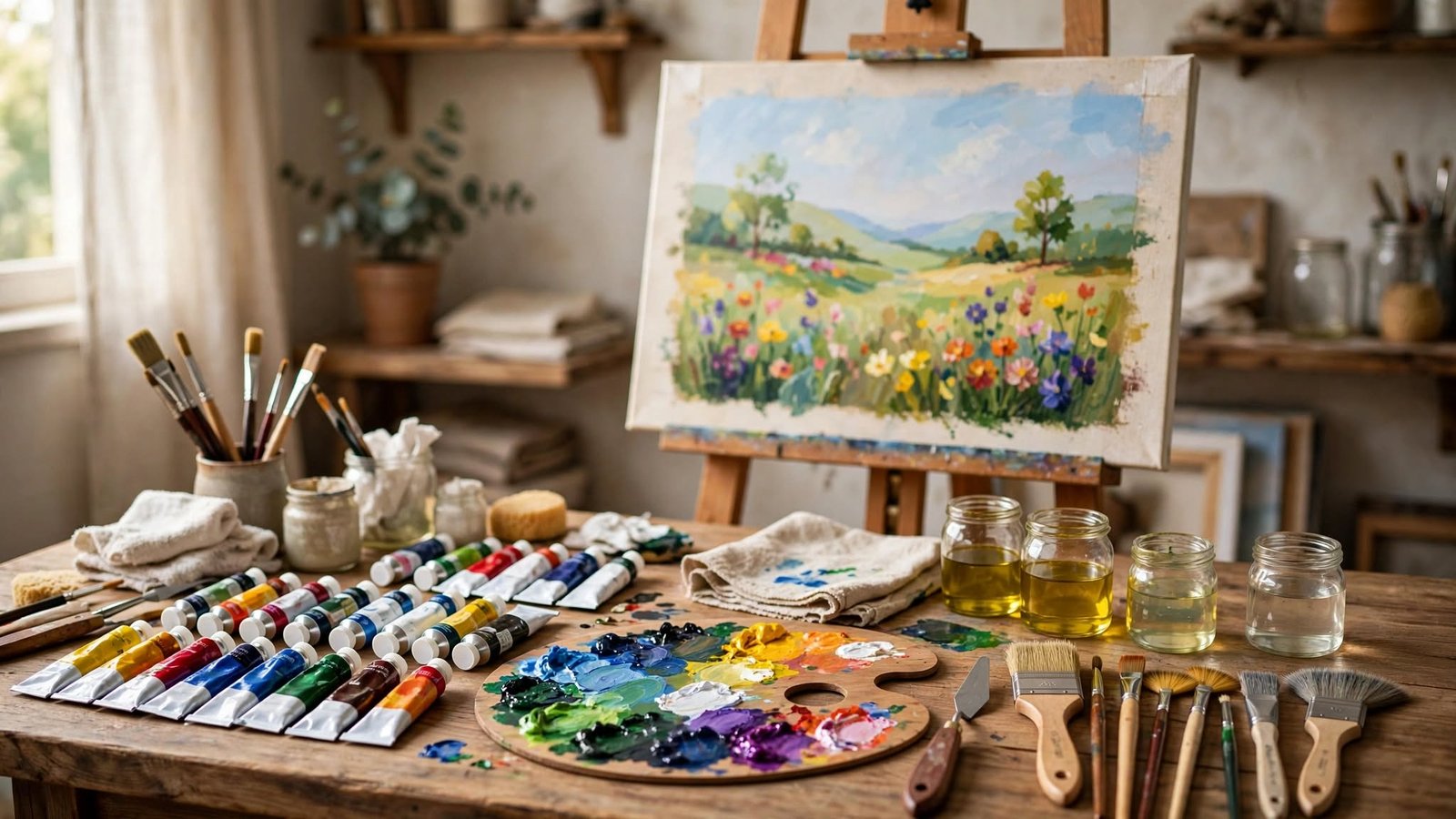
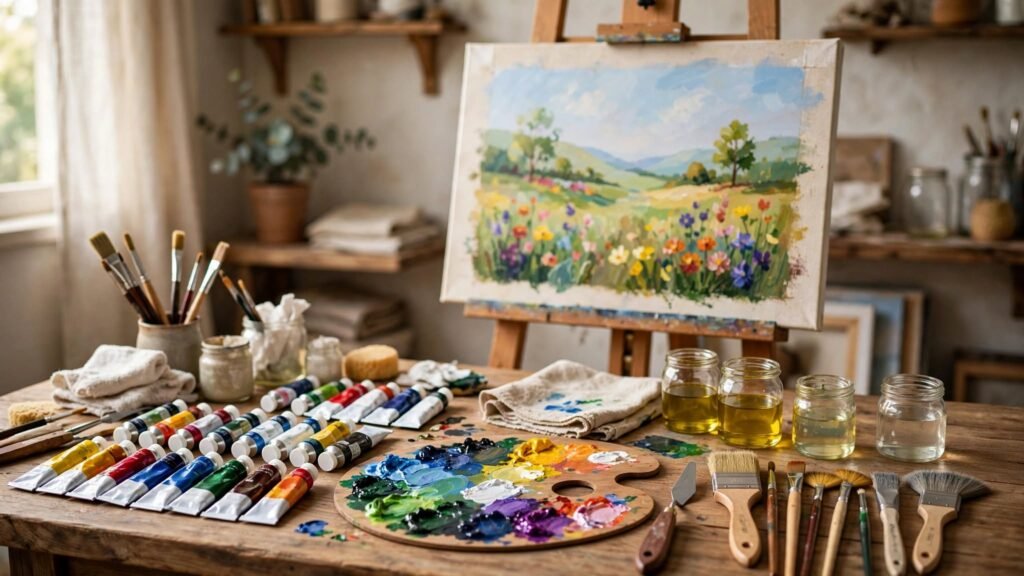
In this guide, we will explore the 15 best oil painting supplies for beginners, from quality oil paints and brushes to canvases, palettes, easels, solvents, and cleaning materials. These essential oil painting supplies can help you create beautiful artwork while developing important painting techniques. Whether you want to paint landscapes, flowers, portraits, still-life artwork, or decorative paintings, having the right beginner painting supplies will give you a comfortable foundation for practicing at home.
1. Oil Paints
Oil paints are the most important supply for anyone learning oil painting. Beginner artists should start with a small selection of essential colors instead of purchasing a huge collection. A practical palette can include titanium white, ultramarine blue, cadmium yellow or a similar warm yellow, yellow ochre, burnt sienna, burnt umber, and a red such as cadmium red or crimson. These colors can be mixed to create many additional shades.
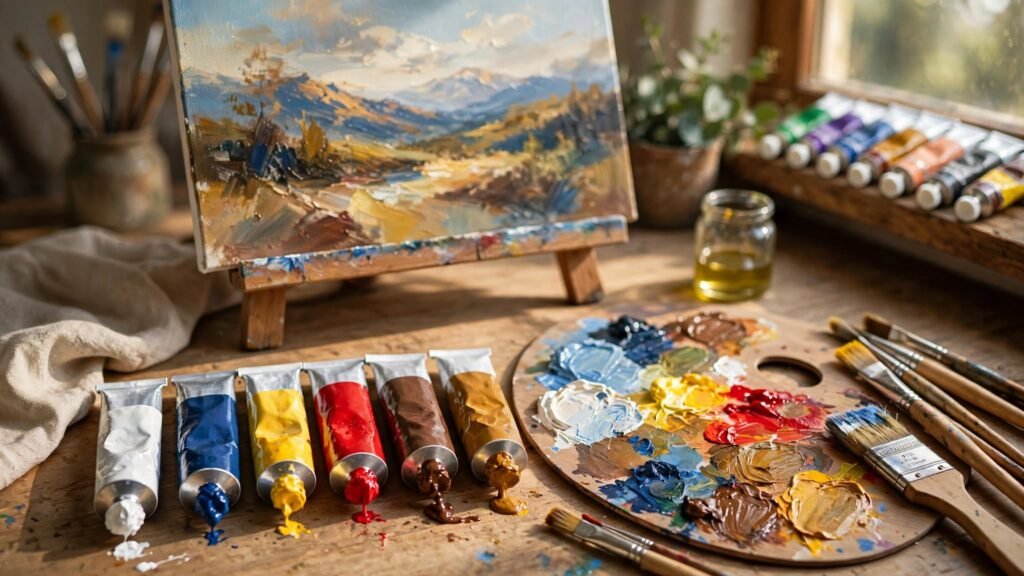
When choosing oil paints for beginners, look for consistent texture, good pigmentation, and a smooth consistency that is easy to spread across the canvas. Artist-quality paints can provide excellent results, but student-grade oil paints are also useful for practicing techniques without spending too much money. Learning how colors mix is more valuable than owning dozens of paint tubes.
2. Oil Painting Brushes
Brushes are essential oil painting supplies because different brush shapes create different marks and textures. Beginners should consider purchasing a basic set containing round, flat, filbert, and bright brushes. A few different sizes are enough to begin practicing broad strokes, fine details, blending, edges, and texture.
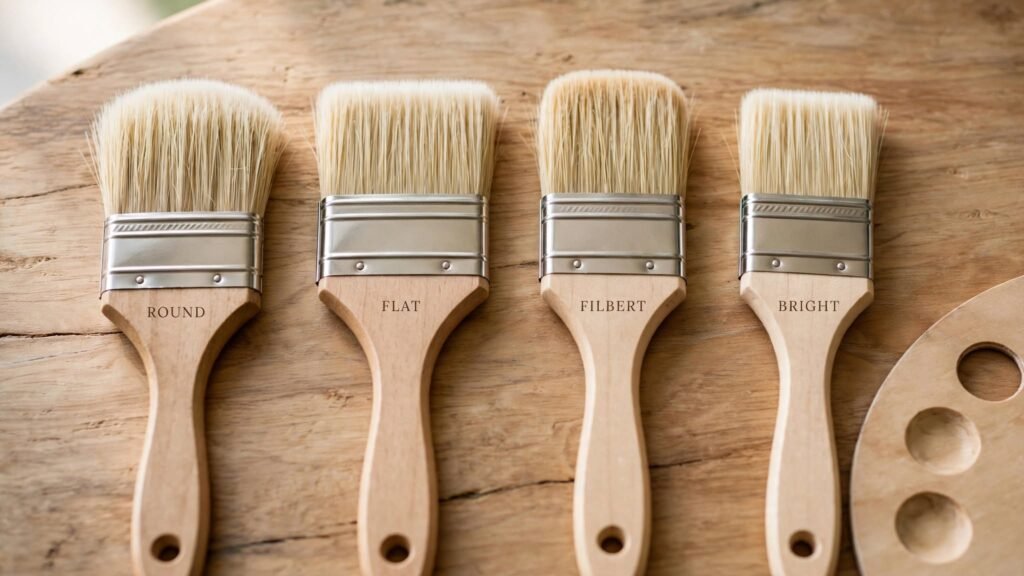
Choose brushes with sturdy handles and bristles that work well with thicker oil paint. Natural and synthetic brushes can both be useful, depending on the painting technique. Instead of buying a very large brush collection, learn how each brush behaves and practice creating different effects. A small collection of versatile brushes can support many beginner oil painting techniques.
3. Painting Canvas
A suitable canvas gives oil paint a stable surface and can significantly affect the final appearance of artwork. Beginners can start with pre-stretched cotton canvases because they are convenient, affordable, and ready to use. Canvas panels are another practical choice when you want a lightweight and inexpensive surface for repeated practice.
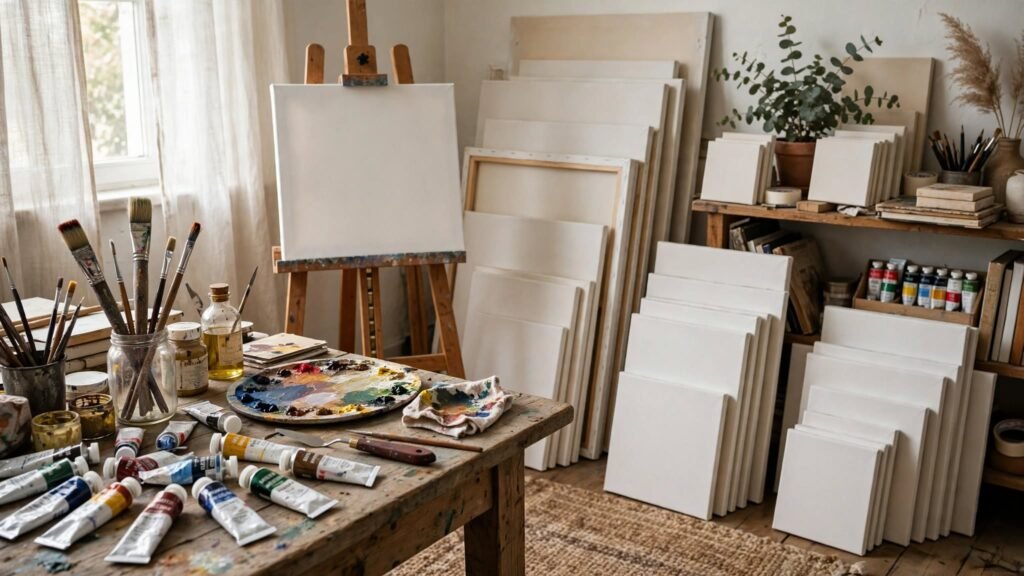
Look for canvases specifically prepared for oil painting or properly primed surfaces. A well-prepared canvas allows paint to move smoothly and helps prevent unwanted absorption. Beginners can experiment with different canvas sizes, but medium-sized canvases are often easier to manage while learning basic composition, color mixing, and brushwork.
4. Oil Painting Palette
A palette provides a convenient surface for organizing and mixing colors. Beginners can use a traditional wooden palette, glass palette, disposable palette sheets, or another smooth, non-porous surface designed for painting. The most important feature is having enough space to separate your colors and create clean mixtures.
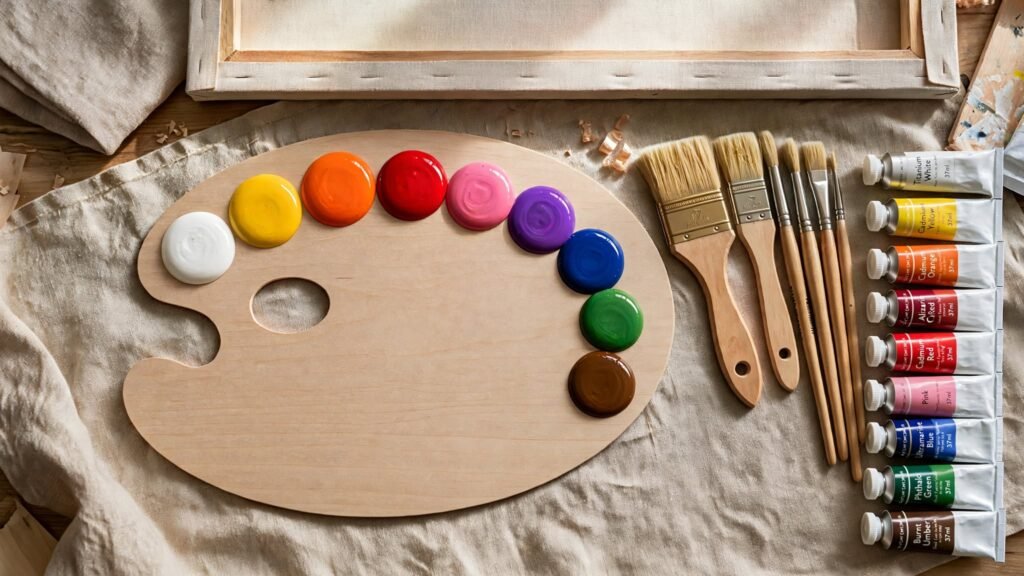
When using a palette for oil painting, arrange colors consistently so you can quickly find them while working. Keep lighter colors separate from darker colors and leave a central area for mixing. Learning to mix colors carefully is one of the most important skills for beginner oil painters, and a well-organized palette makes this process easier. Ready to start painting? Try these easy oil painting ideas for beginners to practice your new supplies and build confidence.
5. Palette Knife
A palette knife is a useful tool for mixing oil paints and creating expressive painting effects. Unlike a brush, it can spread thick paint across the canvas while maintaining visible texture. Beginners can use palette knives to practice impasto techniques, textured backgrounds, highlights, and modern artistic effects.
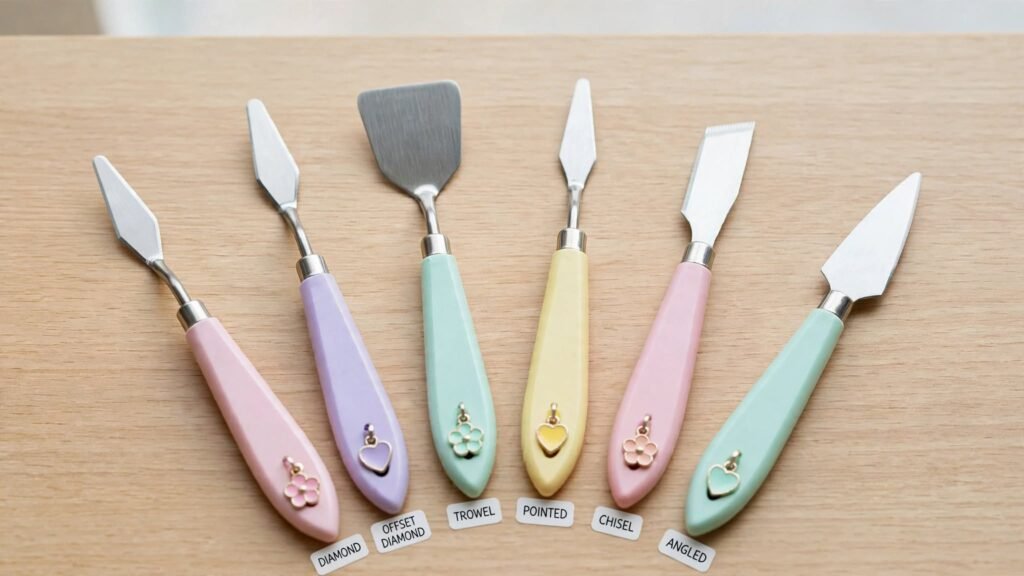
A palette knife is also excellent for keeping your color mixtures cleaner. Instead of mixing everything with a brush, you can use the knife to combine colors on the palette. A small flexible palette knife is usually enough when starting. As you become more comfortable, you can experiment with different knife shapes and sizes.
6. Easel
An easel provides support for your canvas and helps you maintain a comfortable painting position. Beginners can choose from tabletop easels, adjustable studio easels, or compact standing easels depending on available space. A tabletop easel is particularly useful for artists painting in bedrooms, small studios, or home workspaces.
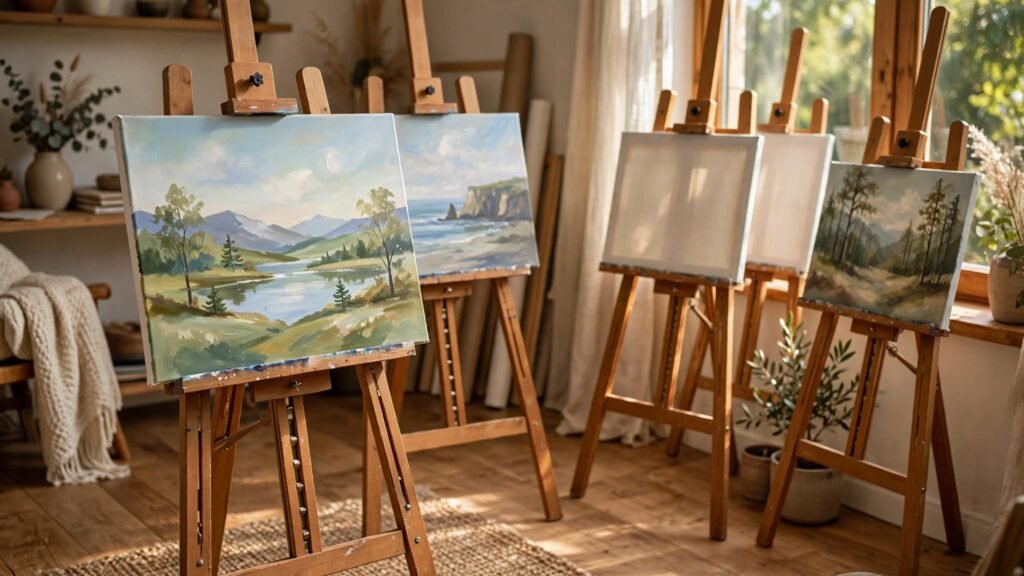
Painting at a comfortable angle can improve visibility and help you evaluate your artwork from a natural perspective. An easel also keeps the canvas stable while you work. You do not need an expensive professional easel at the beginning; a sturdy, adjustable model that fits your canvas size can be a practical addition to your oil painting setup.
7. Linseed Oil
Linseed oil is one of the most familiar mediums used in traditional oil painting. It can change the flow, transparency, gloss, and working characteristics of oil paint. Beginners may use a small amount of suitable painting medium when they want smoother brushwork or more fluid layers.
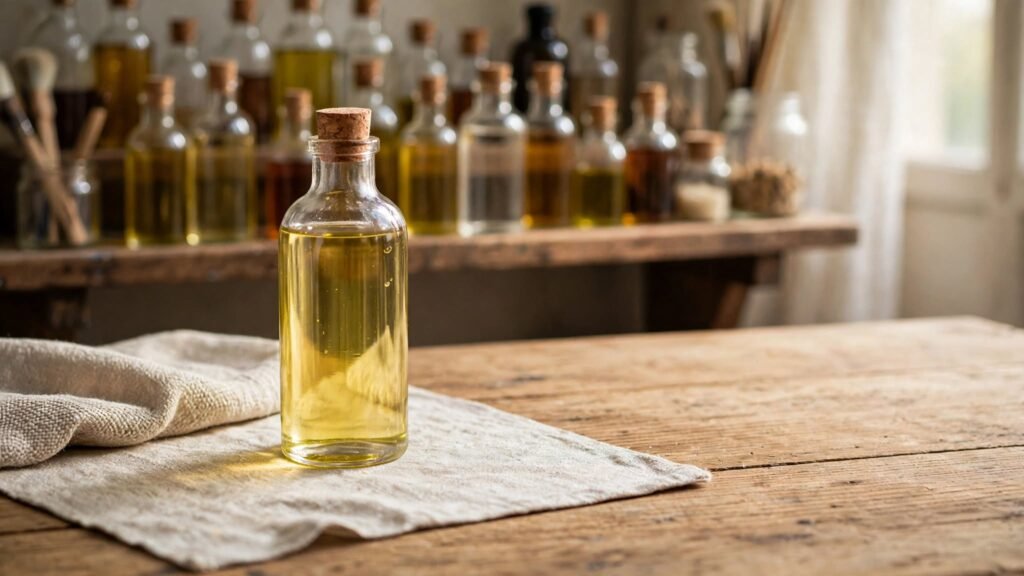
Because mediums can change the behavior of paint, beginners should start by using them sparingly. Too much medium can make paint excessively oily or alter drying characteristics. Always follow the instructions provided with the specific product. Understanding how paint, medium, and solvent interact is an important part of developing controlled oil painting techniques.
8. Odorless Mineral Spirits
Odorless mineral spirits are commonly used for cleaning oil painting brushes and, depending on the product instructions, for thinning paint during certain stages of a painting. For beginners working indoors, an odorless formulation can be more comfortable than stronger-smelling traditional solvents.
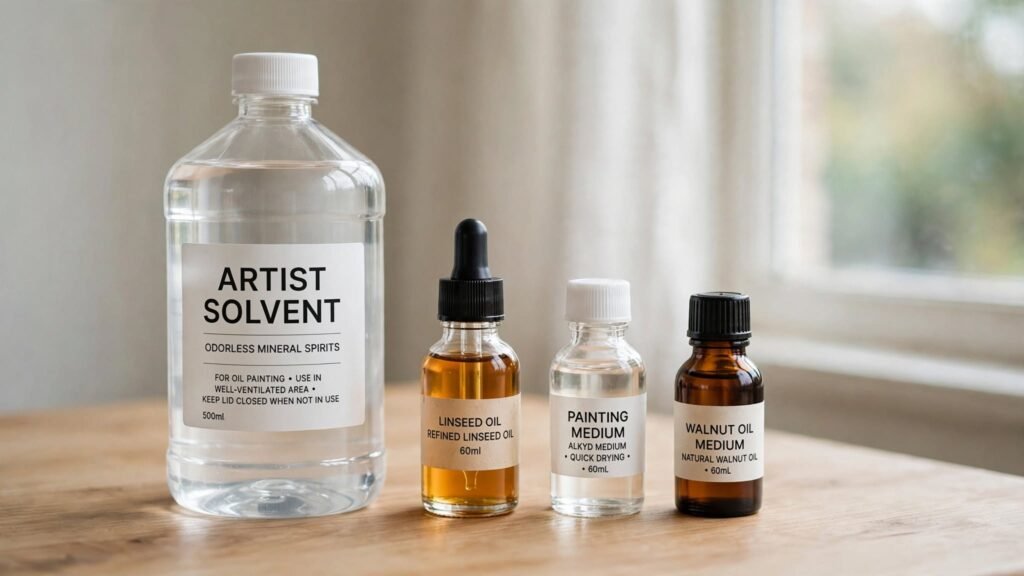
Use solvents carefully and follow the manufacturer’s safety instructions. Keep containers covered when they are not being used and maintain good ventilation in your workspace. Beginners should never treat painting solvents like ordinary household liquids. Proper storage, responsible handling, and regular brush cleaning help create a safer and more organized oil painting environment.
9. Brush Cleaning Jar
A brush cleaning jar is a simple but important part of an oil painter’s workspace. It provides a dedicated container for cleaning brushes between colors and after painting sessions. Choosing a sturdy container that will not easily tip over can help keep your workspace organized.
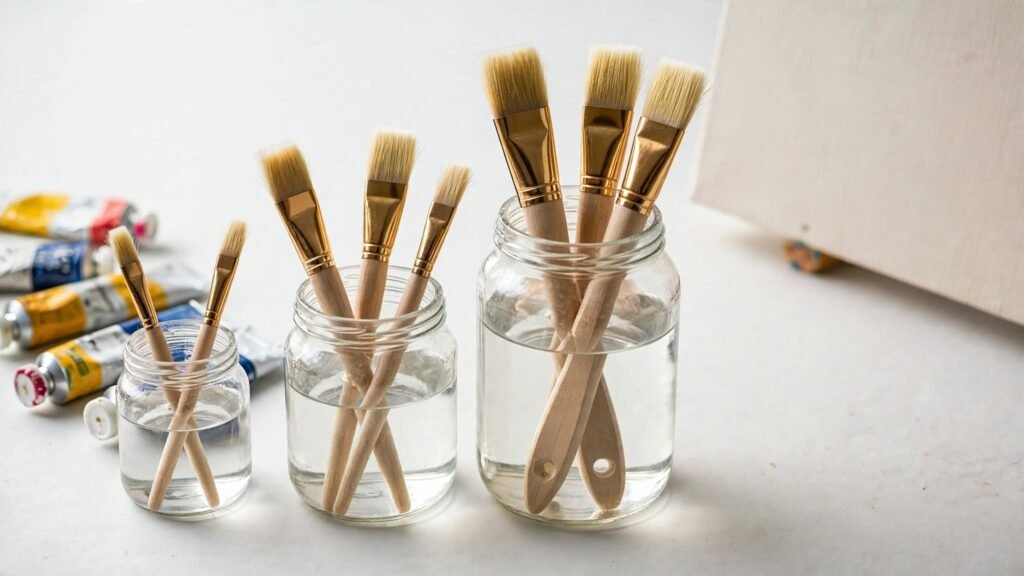
Some artists use specialized brush-cleaning containers with removable inserts or screens that help remove paint from the bristles. Whatever container you choose, remember that used solvent should be handled and disposed of according to local regulations and the product instructions. Good brush-cleaning habits can help extend the life of your brushes.
10. Painting Rags or Paper Towels
Rags and paper towels are inexpensive but extremely useful oil painting supplies. You can use them to wipe excess paint from brushes, clean your palette, soften edges, remove unwanted marks, or create interesting textured effects on the canvas. A clean cloth can also help you correct small mistakes while the paint is still workable.
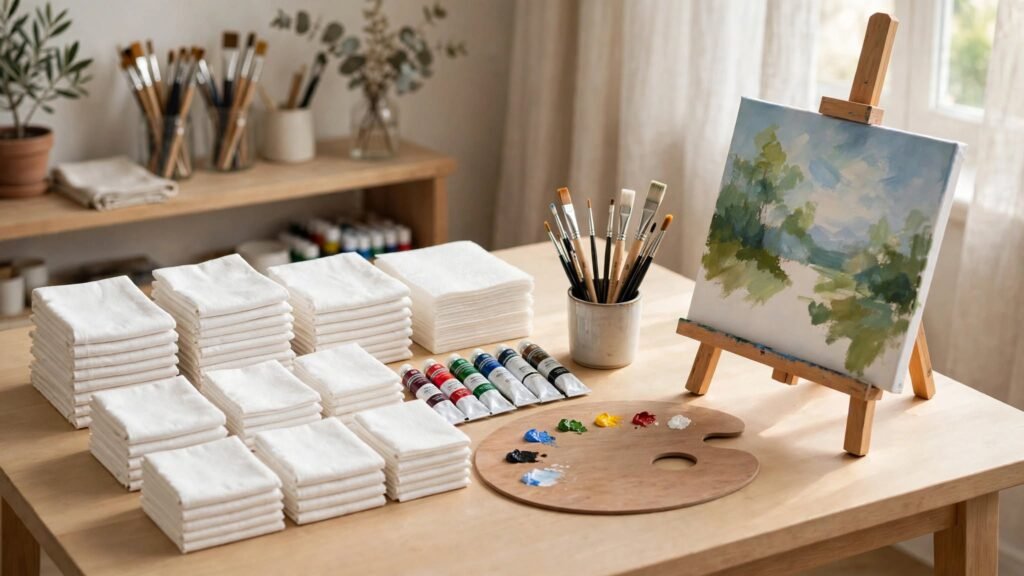
Keep several pieces available while painting so you can quickly clean tools without interrupting your creative process. Reusable cotton rags are useful for many artists, while disposable paper towels provide convenient cleanup. Choose whichever option works best for your workspace and cleaning routine.
11. Pencil and Sketching Tools
A pencil is useful for creating an initial drawing before applying oil paint. Beginners can use a light pencil to establish basic proportions, composition, shapes, and important details. A simple sketch can help prevent major placement mistakes once paint is added to the canvas.
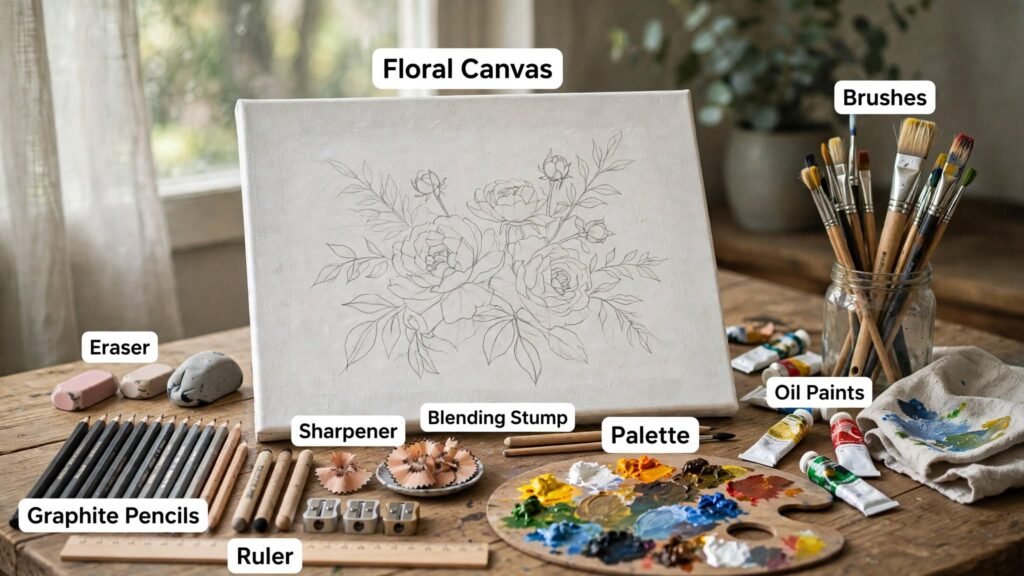
Avoid creating very dark pencil lines that may remain visible through thin layers of paint. A light preliminary drawing is usually enough for simple still-life paintings, flowers, landscapes, and other beginner projects. Some artists also use charcoal or specialized drawing materials, but a basic pencil is an affordable starting point.
12. Color Mixing Chart
A color mixing chart is an excellent learning tool for beginners. Instead of guessing how colors will combine, you can record different mixtures and observe the results. Create small swatches using your chosen oil paints and label the combinations so you can refer to them during future projects.
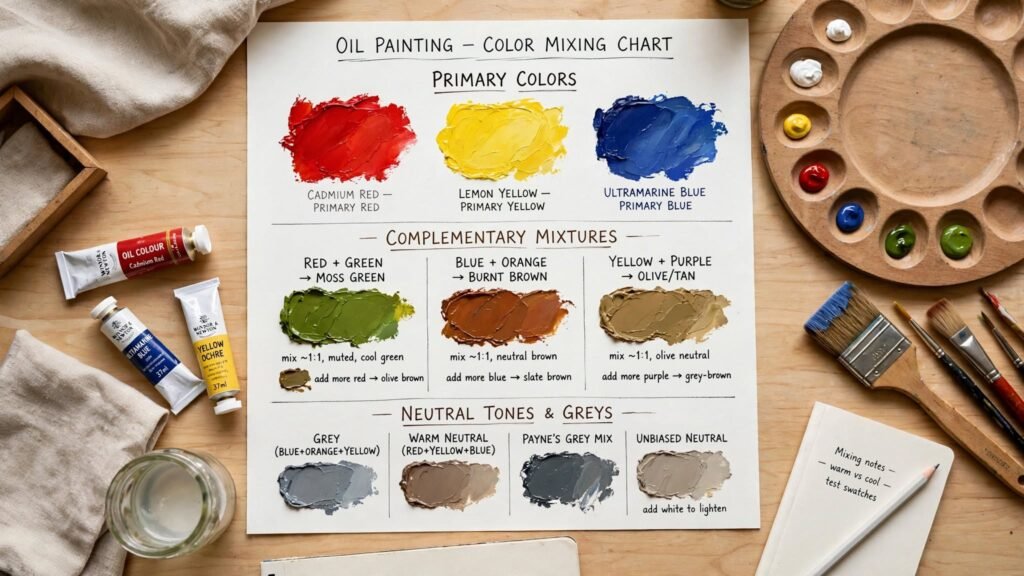
A color chart can help you understand warm and cool colors, complementary colors, neutral mixtures, and value changes. Over time, your chart becomes a personal reference guide. This is especially useful when you want to reproduce a particular color or create consistent palettes for multiple paintings.
13. Apron or Protective Clothing
Oil painting can become messy, especially when working with multiple colors and mediums. A washable apron or protective shirt can help keep your everyday clothing cleaner. Beginners should choose something comfortable that allows easy movement while painting.
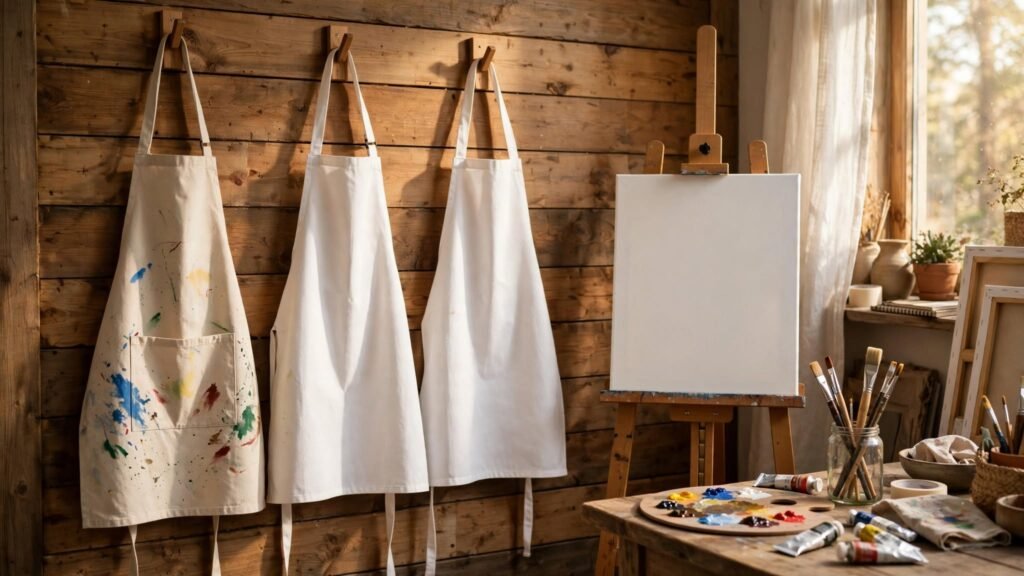
An apron can also help create a dedicated painting routine. Keep it in your art workspace with your brushes, palette, and other supplies so everything is ready when you want to paint. While protective clothing does not directly affect painting quality, it makes the creative process more comfortable and practical.
14. Palette Storage or Airtight Container
Oil paint can remain workable on a palette for some time, depending on the paint and environmental conditions. A palette storage solution or airtight container can help protect paint mixtures between painting sessions. This can be particularly useful when you are working on a painting over several days.
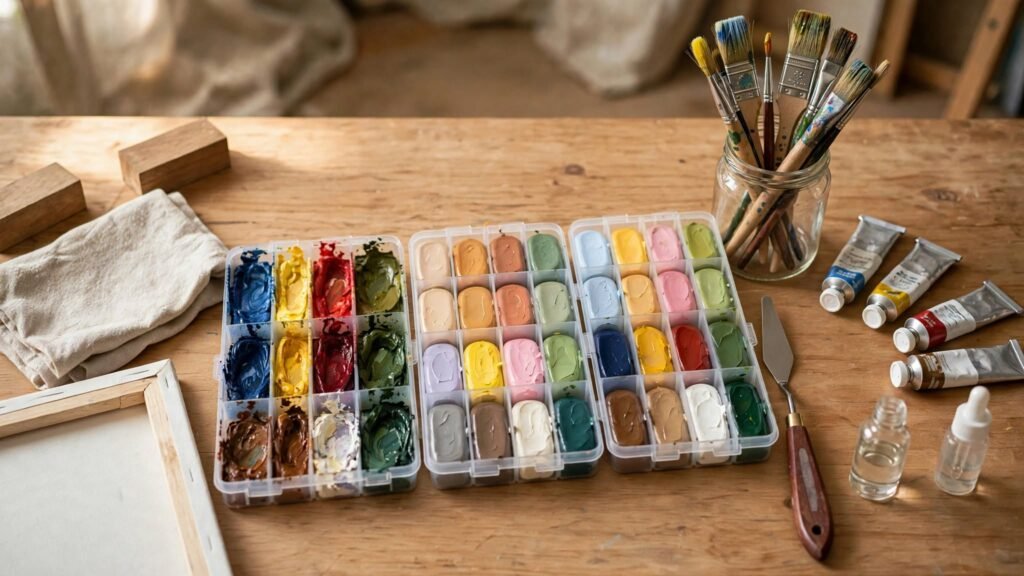
Beginners should choose storage that is suitable for oil paints and easy to clean. Keeping your mixed colors organized can also reduce unnecessary paint waste. Always follow the storage instructions for your particular materials, especially when solvents or other mediums are involved.
15. Good Lighting
Good lighting is one of the most overlooked oil painting supplies for beginners, even though it can have a major effect on the painting process. Natural daylight is useful because it allows you to observe colors clearly. When natural light is unavailable, choose a suitable daylight-balanced art lamp designed for detailed creative work.
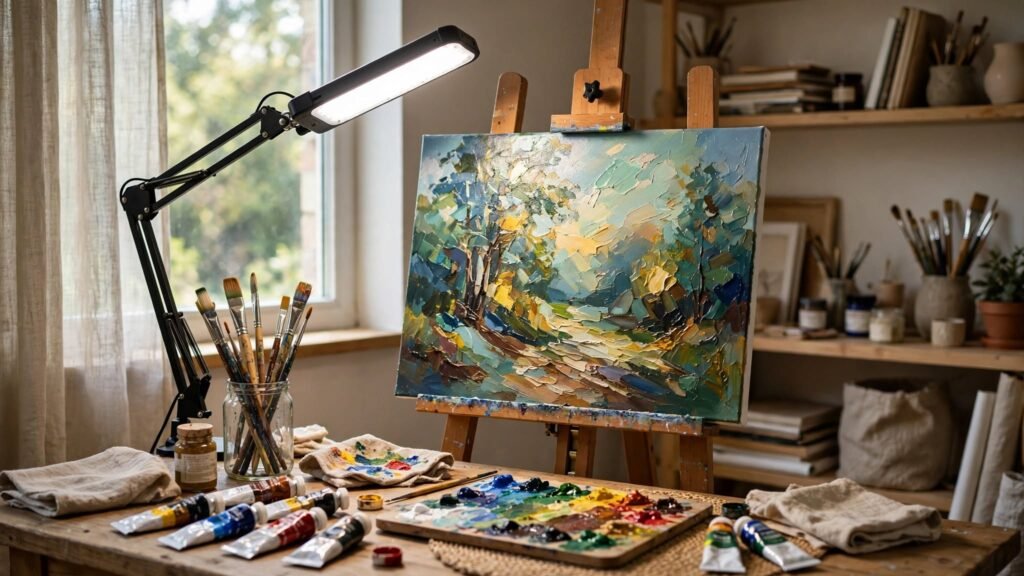
Poor lighting can make colors appear different from their actual appearance and make small details difficult to see. Position your light so it illuminates the canvas without creating distracting glare. A comfortable, well-lit workspace can make painting sessions more enjoyable and help you evaluate color, value, texture, and detail more accurately. Once you have your basic materials ready, learn how to use them with these 10 essential oil painting techniques for beginners, including blending, layering, and brushwork.
Conclusion
Starting oil painting does not require an expensive collection of professional art materials. With the right oil painting supplies for beginners, you can create a practical and comfortable workspace that makes learning easier and more enjoyable. Essential materials such as quality oil paints, versatile brushes, a suitable canvas, palette, easel, palette knife, and cleaning tools provide a strong foundation for practicing important oil painting techniques. Instead of purchasing every product you find, focus on choosing reliable supplies that match your current skill level and painting goals. As your skills develop, you can gradually add new colors, brushes, painting mediums, surfaces, and specialty tools that complement your personal artistic style. Want more oil painting inspiration? Save our beginner-friendly oil painting ideas on Pinterest for your next creative project.
Your oil painting setup can naturally grow as you discover the techniques and subjects you enjoy most. If you love detailed artwork, smaller brushes and additional colors may become valuable additions to your collection. If you prefer expressive artwork, palette knives and thicker paint applications can help create interesting textures. Landscape artists may benefit from larger canvases and specialized brushes, while portrait painters may explore carefully selected skin-tone colors.
The best way to become confident with oil painting is to combine the right oil painting tools with consistent practice. Start with simple subjects such as flowers, landscapes, fruits, still-life arrangements, or easy abstract paintings. Experiment with different brushstrokes, color combinations, and paint thicknesses to discover what works best for you. Keep a color mixing chart and record techniques that produce successful results. Remember that mistakes are a natural part of learning and can help you improve. Gather your essential oil painting supplies, prepare your creative workspace, and start painting regularly to develop your skills and create artwork that reflects your imagination.