Easy Oil Painting: 13 Ideas for Beginners
Oil painting is a beautiful way to explore creativity, experiment with colors, and create artwork that feels rich and expressive. Although oil paints can seem challenging at first, beginners can start with simple subjects, basic color combinations, and easy techniques. You do not need a professional studio or years of painting experience to enjoy oil painting at home. With a small collection of paints, brushes, a canvas, and some patience, you can create attractive artwork while developing your skills.
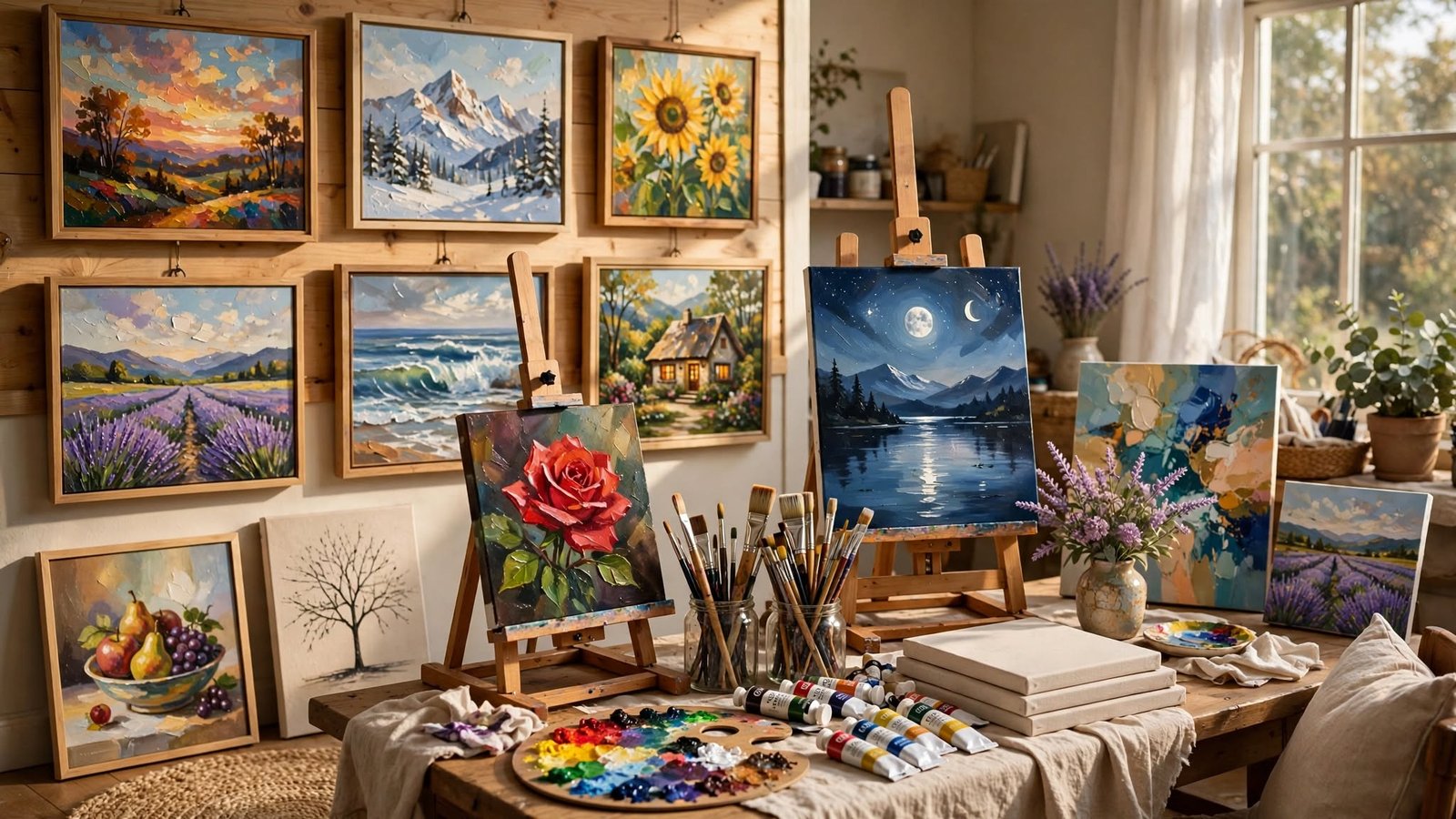
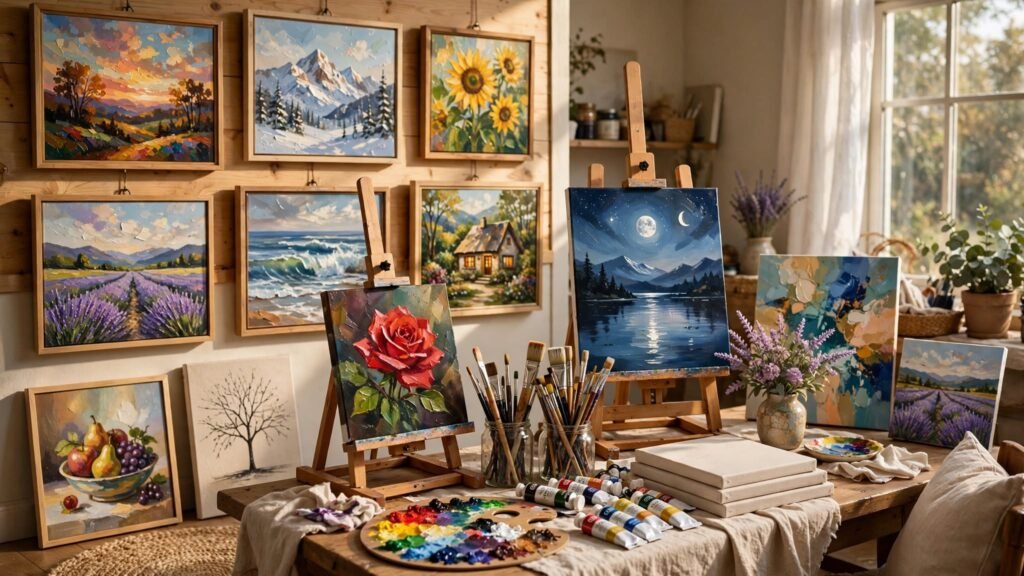
If you are searching for easy oil painting ideas for beginners, start with subjects that are simple enough to understand but interesting enough to keep you motivated. Landscapes, flowers, skies, fruit, mountains, sunsets, and small decorative paintings are excellent choices. These projects allow you to practice blending, layering, brush control, highlights, shadows, and color mixing without becoming overwhelmed. The following 13 ideas are designed to give beginners inspiration for their next painting project. Before starting these projects, learn the basic methods in our guide: 10 Essential Oil Painting Techniques for Beginners to Try at Home
1. Simple Sunset Landscape
A sunset landscape is one of the easiest oil painting projects for beginners because you can focus on blending colors rather than complicated details. Start by painting the sky with warm shades such as yellow, orange, pink, and red. Blend the colors gently while they are still wet to create a smooth transition. Add a dark horizon, a few distant trees, mountains, or a small lake to complete the scene. You can also add reflections in the water using horizontal brushstrokes. This project is especially useful for learning how different colors work together.
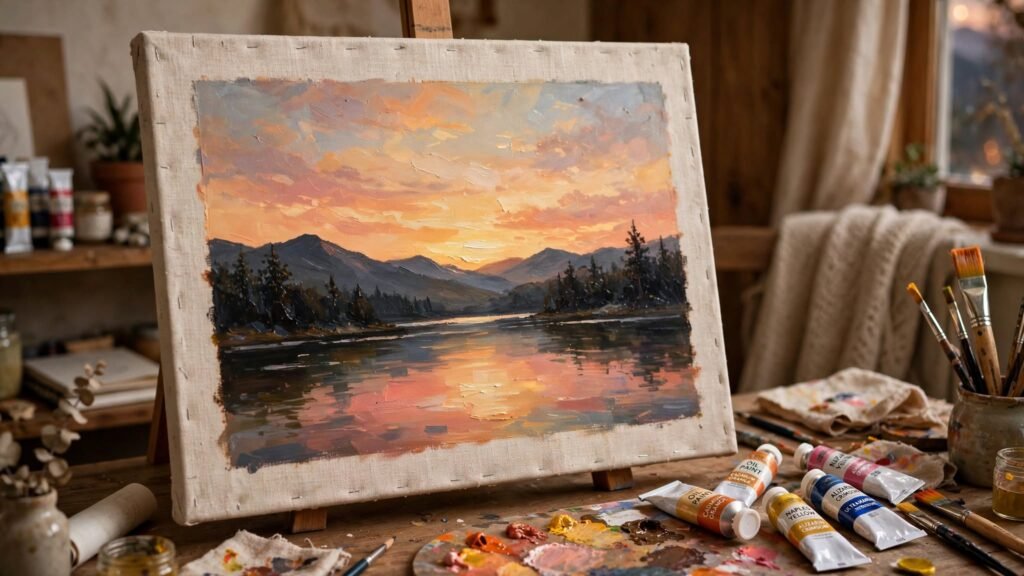
A sunset landscape is one of the easiest oil painting ideas for beginners because it allows you to practice blending without worrying about complicated details. Start by covering the canvas with a soft blue, pink, orange, or yellow sky. Blend the colors gently while the paint is still workable to create a smooth sunset effect. Add distant mountains, trees, or a simple horizon using darker shades. If you include water, use horizontal strokes to create a reflection of the sunset. This project is perfect for learning color transitions, blending, layering, and creating depth while producing a beautiful piece of artwork for your home. Looking for more oil painting inspiration? Explore this easy oil painting idea on Pinterest and save it for your next creative project.
2. Easy Mountain Painting
Mountains are another excellent subject for beginners because they can be created using simple shapes and layers. Begin with a light sky and then add distant mountains using lighter colors. Gradually use darker shades for the mountains in the foreground. Try adding snow-capped peaks with white and light blue paint. Use a palette knife or a dry brush to create interesting mountain textures. You do not need to make every mountain perfectly realistic. Simple shapes can produce a beautiful landscape.
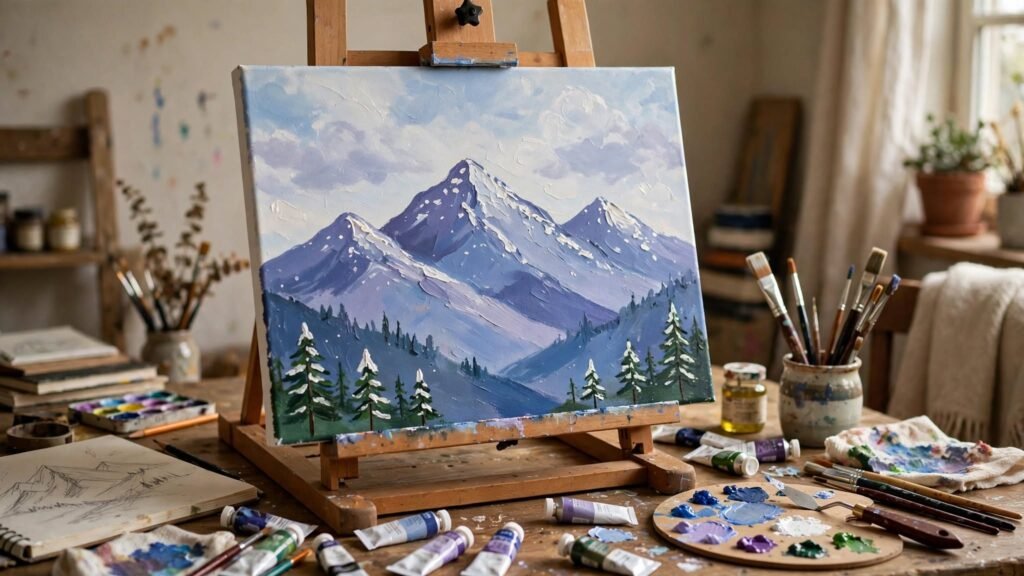
An easy mountain painting is a great project for beginners who want to learn how to create landscapes with simple shapes. Begin with a soft blue or cloudy sky and then block in distant mountain peaks using lighter shades. Add darker mountains in the foreground to create depth and dimension. You can use blue, purple, gray, green, and white to create different atmospheric effects. For snowy mountains, add small white highlights along the peaks and slopes. A dry brush or palette knife can help create natural textures. Keep the shapes simple rather than focusing on realistic details, making this an enjoyable beginner oil painting project. Want more landscape inspiration? Explore this easy mountain oil painting idea on Pinterest and save it for your next painting project.
3. Colorful Sunflower Painting
Sunflowers are ideal for beginners because their large petals make it easy to practice individual brushstrokes. Paint a warm background first and then create the flower using yellow and golden tones. Use darker brown shades for the center and add green leaves around the flower. Try using separate brushstrokes for the petals instead of blending everything. This gives the painting a lively, handmade appearance.
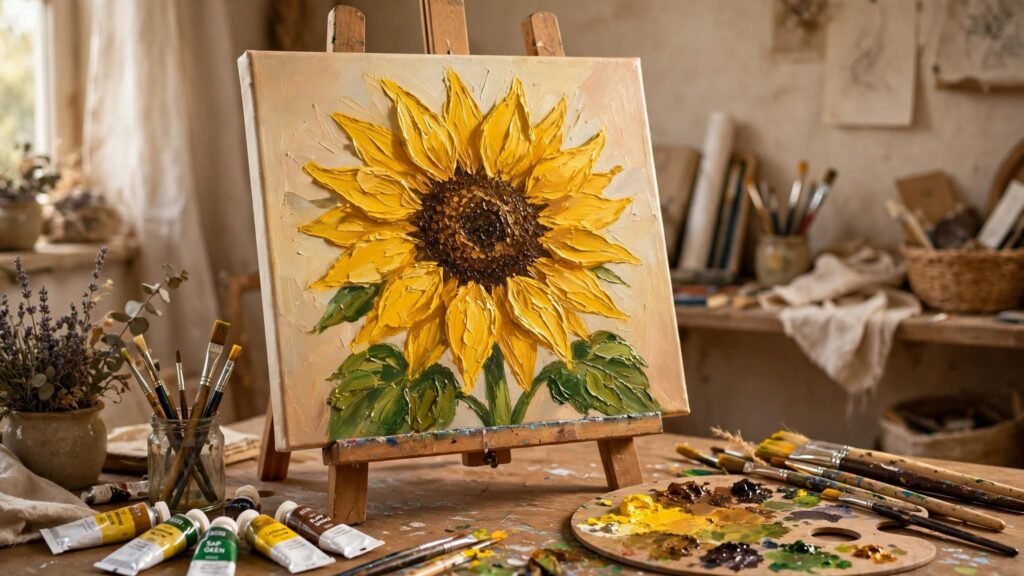
A colorful sunflower painting is a cheerful project that beginners can easily try at home. Start with a simple background before creating the sunflower in the center of the canvas. Use yellow and golden shades for the petals, adding small variations in color to make them look more interesting. Paint the center with brown, dark orange, or deep earthy tones, then add green leaves and a stem. Use individual brushstrokes to create the appearance of petals instead of blending everything. This project is useful for practicing brush control, color mixing, layering, highlights, and shadows while creating bright floral artwork for your room. If you are new to oil painting, check out our guide, 15 Essential Oil Painting Supplies Every Beginner Needs, before starting your first project.
4. Simple Ocean Waves
Painting ocean waves is a great way to practice movement and texture. Start with different shades of blue for the water and blend them horizontally. Add darker blue areas for depth and lighter turquoise shades near the surface. Use white paint to create foam and wave highlights. A palette knife can be useful for creating textured white waves. Keep the composition simple by focusing on a small section of the ocean instead of attempting a complicated seascape.
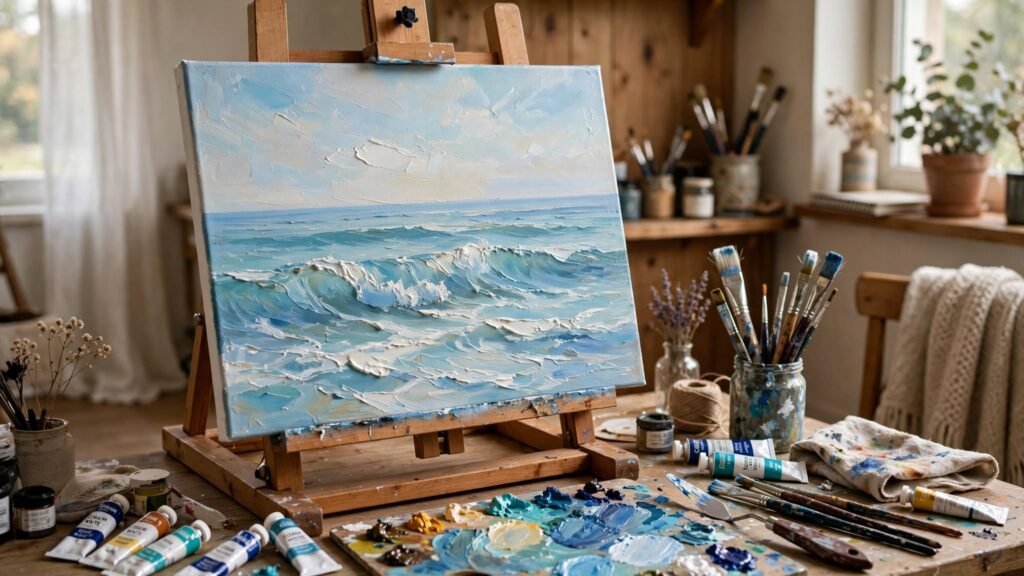
Simple ocean waves are an excellent oil painting project for beginners who enjoy painting nature. Begin by creating a basic horizon line and covering the water with different shades of blue. Add turquoise or green tones in selected areas to give the ocean more variation. Use darker blue paint to create depth and lighter colors for areas where the light touches the water. Finally, add white paint to create foamy wave edges and small highlights. A palette knife can help produce interesting textures in the waves. Keep your composition simple and focus on movement, color blending, and texture rather than trying to paint a complicated seascape.
5. Pretty Lavender Field
A lavender field can be painted using simple repeated strokes, making it perfect for beginners. Start with a pale blue or pink sky and add distant hills. Then use purple and violet strokes to create rows of lavender. You can vary the shades of purple to make the field appear deeper. Add a few green stems and small highlights to make the flowers stand out. This project is also a wonderful opportunity to experiment with loose, expressive brushwork.
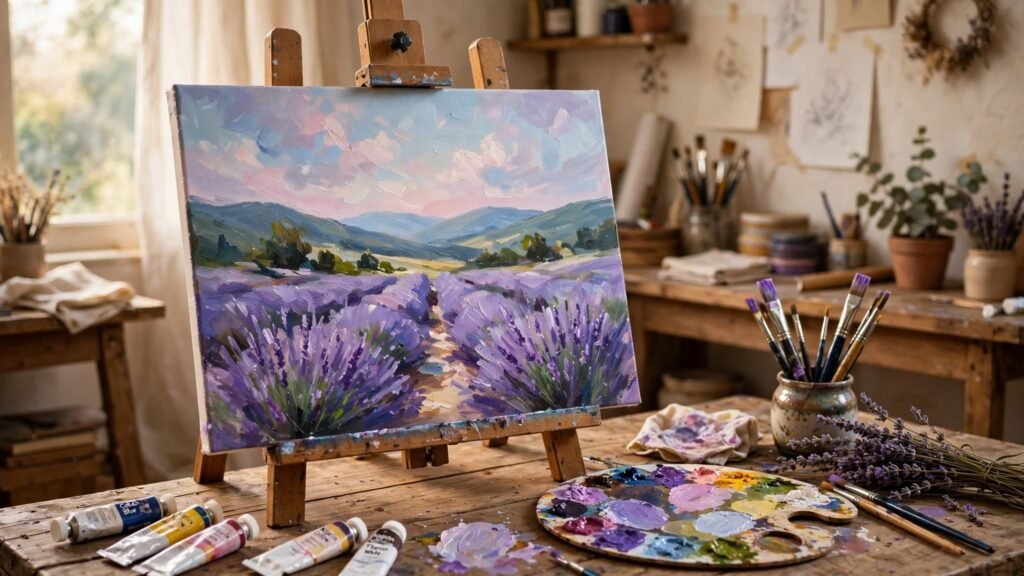
A lavender field is a beautiful and relaxing oil painting idea for beginners. Start by painting a soft sky using light blue, pink, or purple shades. Add distant hills using gentle brushstrokes before creating rows of lavender flowers in the foreground. Different shades of purple, violet, blue, and pink can make the flowers appear more natural and colorful. Use green paint for the stems and leaves, then add small lighter strokes to represent flowers catching the sunlight. You do not need to paint every flower individually. Loose and repeated brushstrokes can create the impression of a large field while helping beginners practice texture, perspective, color, and depth.
6. Easy Fruit Bowl Painting
A bowl of fruit is a classic still-life exercise that helps beginners understand shapes, light, shadows, and color. Choose two or three simple fruits such as apples, oranges, lemons, or pears. Paint the background first and then block in the basic shapes of the fruit. Add darker shades around the edges and underneath the fruit to create depth. Finally, add small highlights where the light naturally hits the fruit.
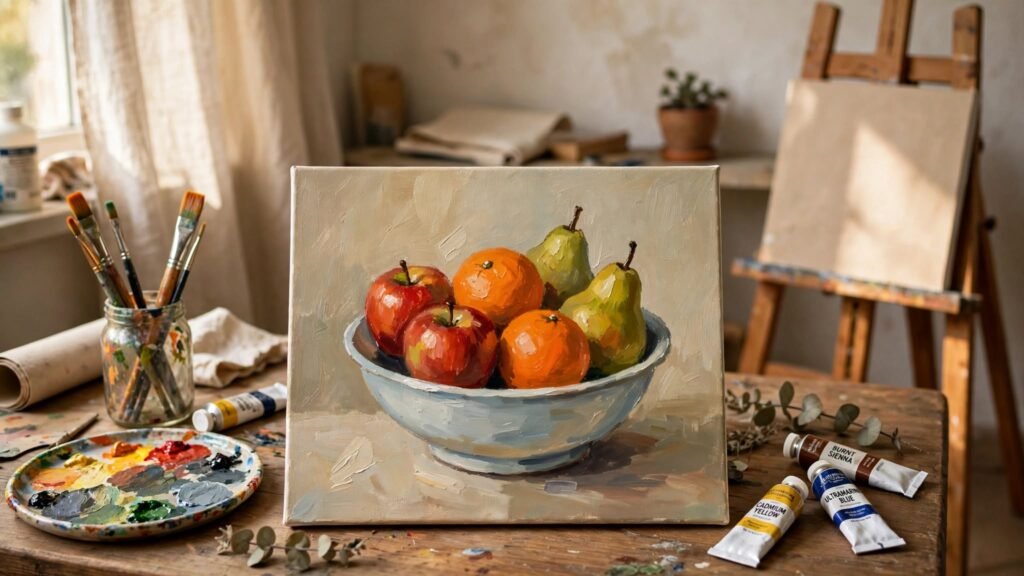
An easy fruit bowl painting is a classic still-life project that can help beginners understand basic shapes, colors, shadows, and highlights. Choose a simple bowl and a few fruits such as apples, oranges, pears, or lemons. Begin by lightly planning the shapes before applying your oil paint. Block in the main colors and then gradually add darker shades around the edges and underneath the fruit. Use lighter paint to create small highlights where light naturally falls. Keep the background simple so the fruit remains the focus. This project is an excellent way to practice observation, proportions, color mixing, layering, and creating three-dimensional forms.
7. Cozy Cottage Landscape
A cozy cottage landscape can become a charming beginner oil painting that adds warmth to your home décor. Start with a simple blue or cloudy sky and then create a small cottage using basic shapes such as rectangles and triangles. Surround the house with trees, grass, flowers, or bushes using different shades of green. Add a simple pathway leading toward the cottage to create a sense of depth. Warm colors on the house can contrast beautifully with the surrounding landscape. You do not need to paint every architectural detail. Focus on the overall composition, color balance, light, and atmosphere to create a peaceful handmade landscape.
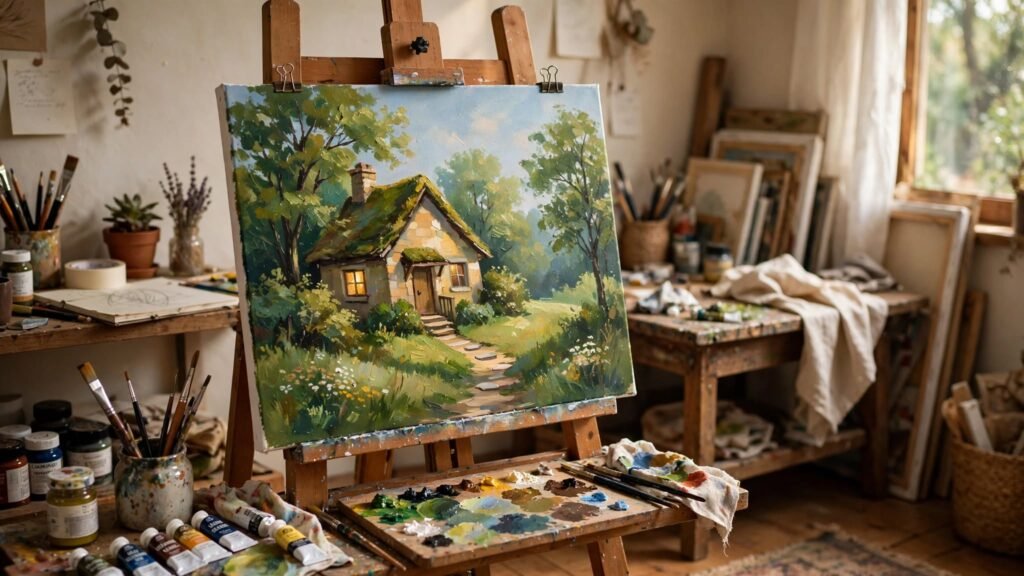
A small cottage surrounded by trees and grass can become a charming beginner oil painting. Keep the house simple with basic geometric shapes and focus more on the surrounding landscape. Use green shades for grass and trees, warm colors for the cottage, and soft blues for the sky. Adding a pathway leading toward the house can create depth and make the composition more interesting.
8. Simple Moonlight Night Scene
A moonlight night scene is a simple yet atmospheric oil painting project for beginners. Begin with a dark blue or purple background and gradually blend lighter shades around the area where you want the moon to appear. Paint a large white or pale yellow moon and add subtle highlights around it. Dark trees, mountains, or buildings can be added as silhouettes in the foreground. If you include water, create a soft vertical reflection beneath the moon. This project is particularly useful for learning contrast, blending, layering, and light effects. The limited color palette also makes it easier for beginners to focus on composition and atmosphere.
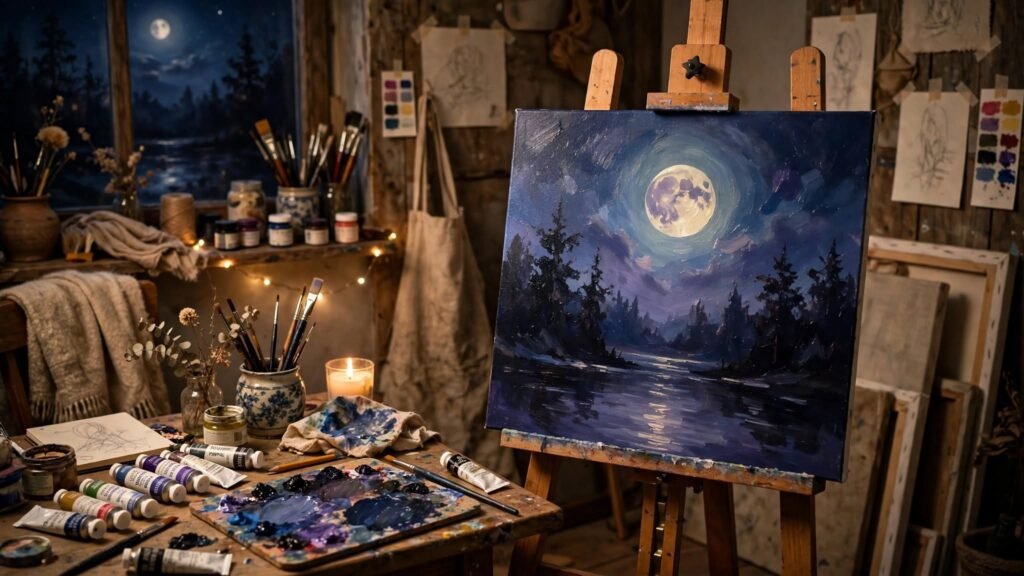
A moonlit scene can be created with a limited color palette, making it a great beginner project. Use dark blue, purple, black, and white to create the night sky. Paint a large moon and add silhouettes of trees or mountains in the foreground. White highlights around the moon can create a soft atmospheric effect. This painting is a good opportunity to practice contrast between light and dark areas.
9. Red Rose Oil Painting
A red rose is a beautiful subject for beginners who want to practice flower painting with oil colors. Instead of attempting a highly realistic rose, begin with a simple circular flower shape and gradually build the petals using curved brushstrokes. Use different shades of red, pink, and white to create highlights and darker tones for the inner petals. Add green leaves and a simple dark background to make the flower stand out. The most important part is experimenting with brush pressure and direction. This project helps beginners develop brush control, layering, color blending, highlights, shadows, and confidence while creating attractive floral artwork.
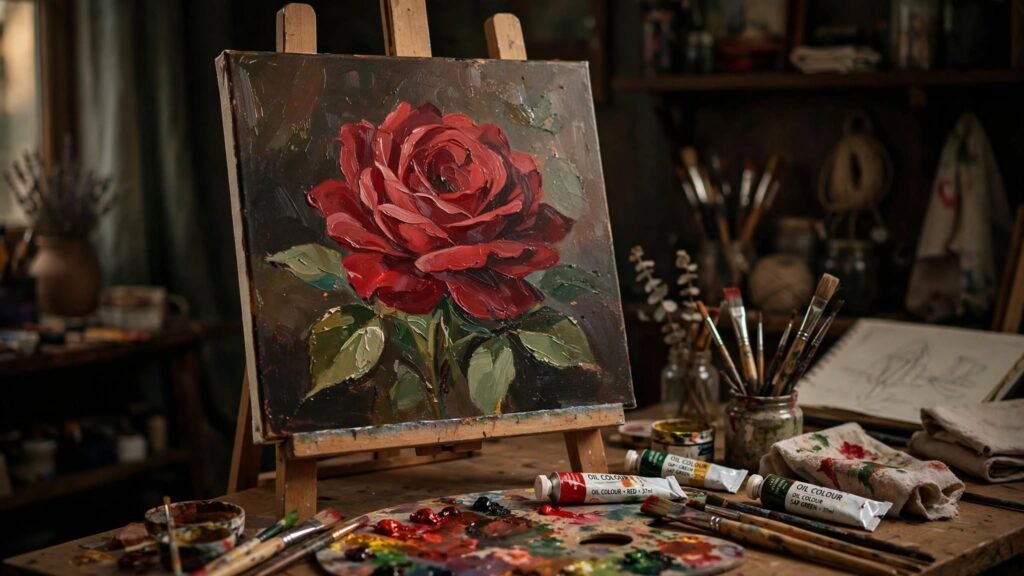
Roses may look complicated, but beginners can simplify them into layered curved brushstrokes. Begin with a basic circular shape and gradually add darker and lighter petals. Use different shades of red, pink, and white to create depth. A dark green background can make the rose stand out beautifully. This project is particularly useful for practicing brush control and layering.
10. Minimalist Tree Painting
A minimalist tree painting is perfect if you want a simple project with a modern appearance. Paint a soft background in one or two colors, then create the trunk and branches using darker paint. Add foliage using small dabbing motions. You can use different shades of green or even experiment with unusual colors such as blue, lavender, or muted orange. The result can become a stylish piece of handmade wall art.
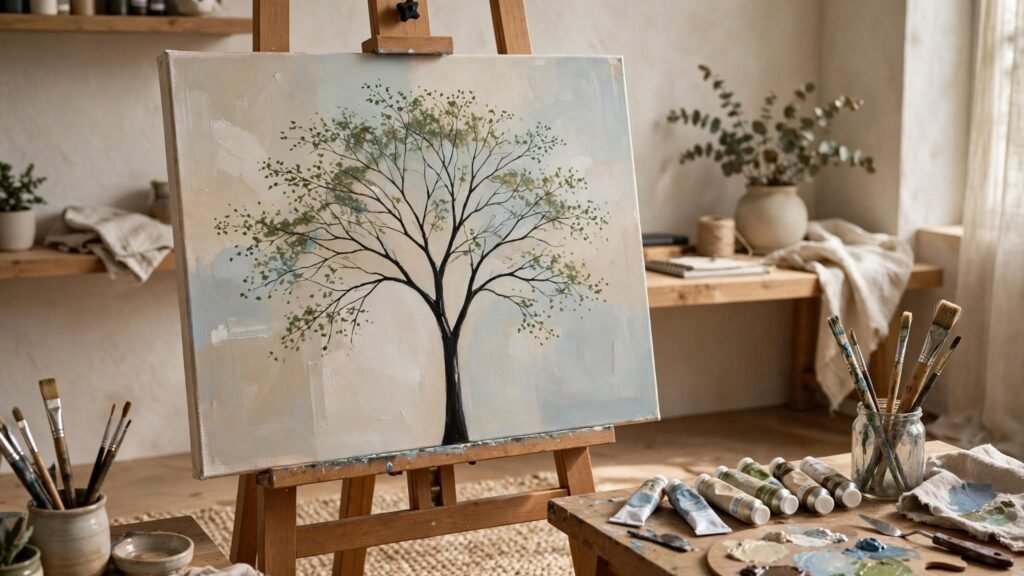
A minimalist tree painting is an excellent option for beginners who prefer simple and modern artwork. Start with a soft background using one or two colors, such as beige, pale blue, cream, or light gray. Paint the tree trunk and branches with a darker shade, keeping the shapes loose and natural. For the foliage, use small dabbing brushstrokes to create leaves and texture. You can experiment with traditional green colors or choose unusual shades such as blue, lavender, pink, or orange. This simple project allows you to focus on composition, brush movement, negative space, and color balance while creating stylish handmade wall décor.
11. Beautiful Floral Vase
A vase filled with flowers gives beginners the opportunity to combine several basic painting skills. Start with a simple vase shape and then add flowers using loose brushstrokes. You can choose roses, daisies, tulips, or wildflowers. Focus on the overall arrangement instead of trying to paint every flower realistically. Adding shadows beneath the vase and highlights on its surface will make the painting feel more dimensional.
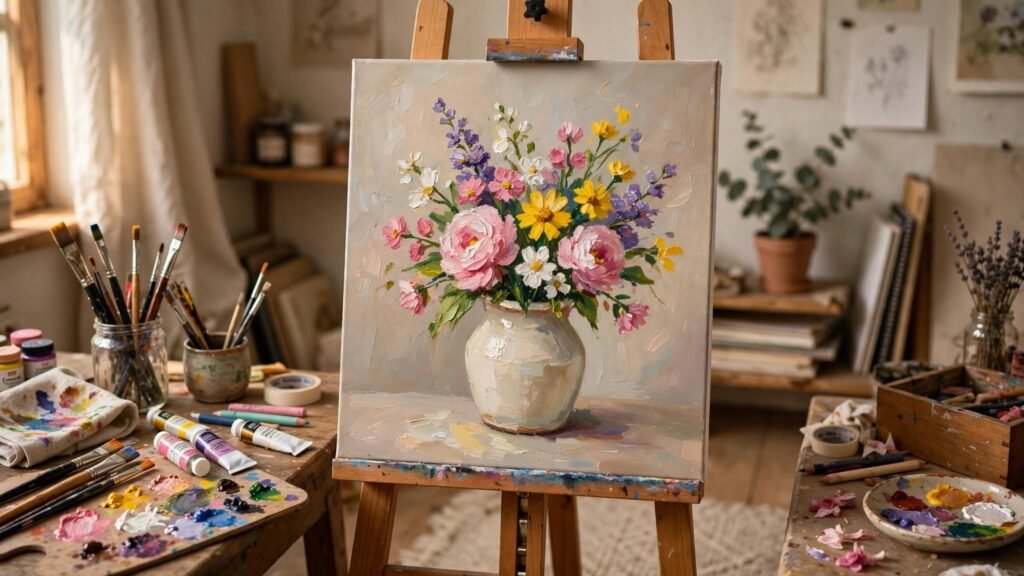
A floral vase painting is a wonderful beginner project because it combines simple still-life and flower-painting techniques. Begin by drawing a basic vase shape and filling it with your chosen color. Add several flowers above the vase using loose brushstrokes rather than trying to create perfect individual petals. You can paint roses, tulips, daisies, lavender, or a mixture of different flowers. Add darker paint around the base of the vase to create a shadow and lighter paint along its surface for highlights. Keep the background simple so the flowers remain the main focus. This project helps beginners practice composition, layering, color mixing, and expressive brushwork.
12. Calm Forest Path
A forest path is an excellent subject for practicing perspective and depth. Begin with a light background and add distant trees using softer colors. Make the foreground trees darker and more detailed. Create a winding path that becomes narrower as it moves into the distance. Small highlights of sunlight between the trees can add warmth and visual interest.
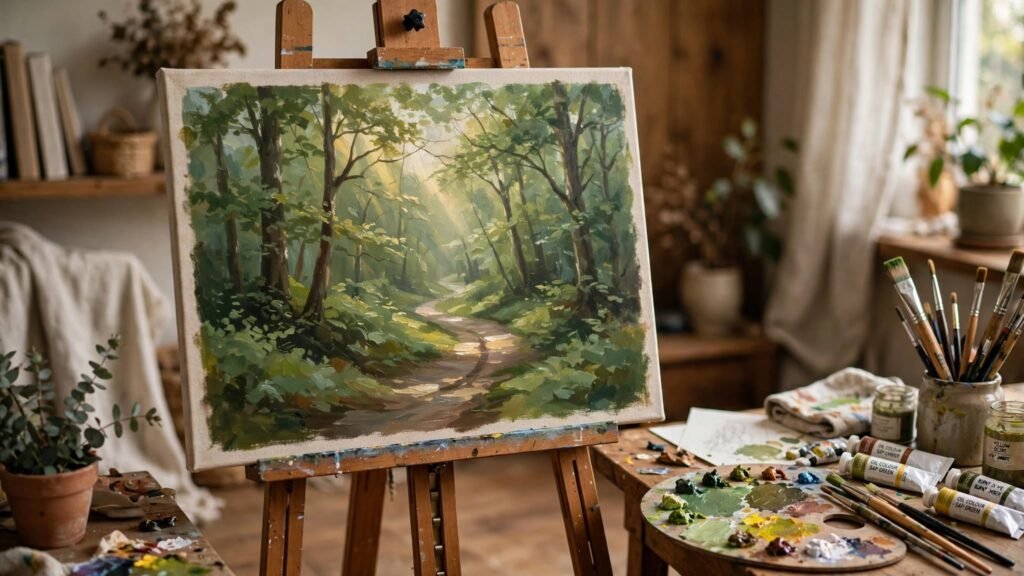
A calm forest path is a wonderful oil painting idea for beginners who want to practice creating depth. Start with a light background and distant trees using softer, lighter colors. As you move toward the foreground, gradually make the trees darker and more detailed. Paint a winding path that becomes narrower as it moves into the distance. Add different shades of green to the leaves and grass, then use small areas of yellow or white to represent sunlight passing through the trees. This project teaches beginners about perspective, atmospheric depth, contrast, layering, and light. The final result can create a peaceful landscape suitable for home décor.
13. Easy Abstract Oil Painting
Abstract painting is one of the most flexible options for beginners because there are no strict rules about creating realistic objects. Choose three to five colors that work well together and experiment with broad brushstrokes, lines, shapes, and texture. You can create an abstract composition inspired by nature, emotions, flowers, or landscapes. A palette knife can also be used to spread thick paint across the canvas. Abstract art is a great way to enjoy the process without worrying about perfection.
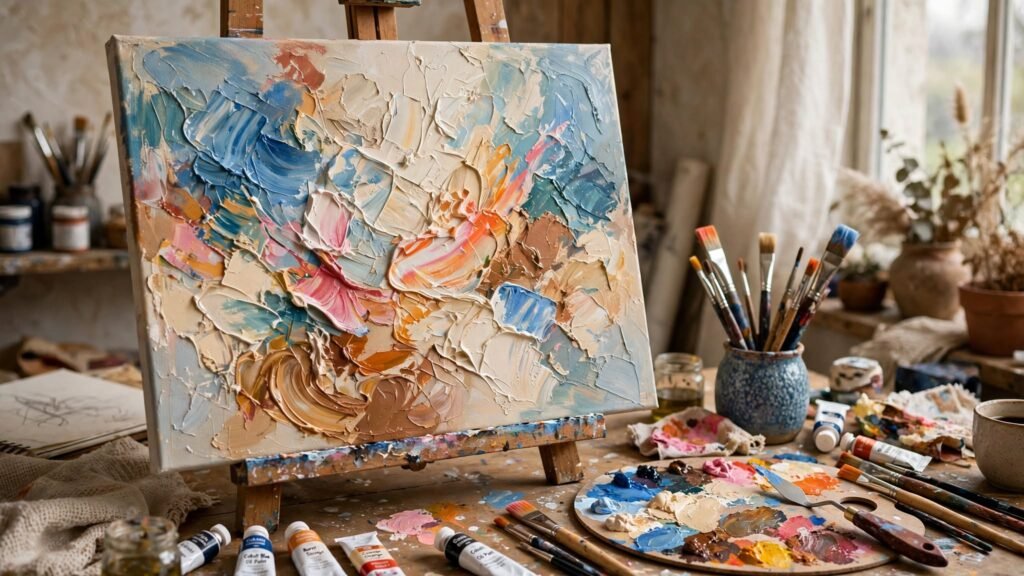
An easy abstract oil painting gives beginners complete freedom to experiment with colors, shapes, textures, and brushstrokes. Unlike realistic painting, abstract art does not require you to create recognizable objects or perfect proportions. Choose three to five colors that work well together and begin applying broad strokes, curved lines, dots, or geometric shapes to your canvas. A palette knife can be used to create thick layers and interesting textures. You can take inspiration from nature, emotions, flowers, or landscapes while developing your own composition. This project is perfect for beginners because mistakes can become part of the artwork, and every painting can have a unique result.
Tips for Beginners Starting Oil Painting at Home
Before starting your first oil painting, prepare a comfortable workspace with good ventilation and enough natural or artificial light. Keep your canvas, brushes, palette, paints, paper towels, and cleaning supplies organized so you can work without interruptions.
Start with a limited color palette instead of buying every available color. Learning how to mix colors is an important part of becoming comfortable with oil paints. Practice creating lighter and darker versions of the same color by mixing white, darker pigments, or complementary colors.
Do not worry if your first painting does not look exactly like your reference image. Oil painting takes practice, and every project helps you understand brush pressure, color mixing, composition, blending, and layering. Save your early paintings so you can compare them with your future work and see your progress.
Most importantly, enjoy the process. Beginner oil painting should be an opportunity to experiment and develop your personal style. Start with small canvases if larger projects feel intimidating, and gradually move toward more detailed subjects as your confidence grows.
Conclusion
Oil painting is a rewarding creative activity that beginners can enjoy from the comfort of home. You do not need advanced artistic skills to begin creating beautiful artwork. Simple subjects such as sunsets, mountains, flowers, fruit, ocean waves, trees, and cozy landscapes provide excellent opportunities to learn essential techniques while keeping the process enjoyable. Each painting allows you to experiment with color, texture, light, shadows, blending, and brushwork. Instead of trying to create a perfect masterpiece immediately, focus on understanding how your materials behave and how different techniques affect the final result. Even a small canvas can become an exciting creative project when you approach it with patience and curiosity.
The 13 ideas in this guide can also help you discover which type of painting you enjoy most. If you love nature, try a mountain landscape, lavender field, forest path, or sunset. If flowers interest you, experiment with sunflowers, roses, or a colorful vase. For artists who prefer modern artwork, minimalist trees and abstract compositions offer plenty of freedom.
Most importantly, do not let the fear of making mistakes stop you from painting. Oil painting is a skill that improves with practice, observation, and experimentation. Start with a simple subject, work in manageable layers, and permit yourself to learn along the way. Keep your favorite paintings as reminders of your progress and use each new project to try something different. Whether you want to create wall art, handmade gifts, decorative pieces, or simply enjoy a relaxing creative hobby, these easy oil painting ideas can give you a starting point. Pick your favorite idea, prepare your supplies, and let your creativity take over.