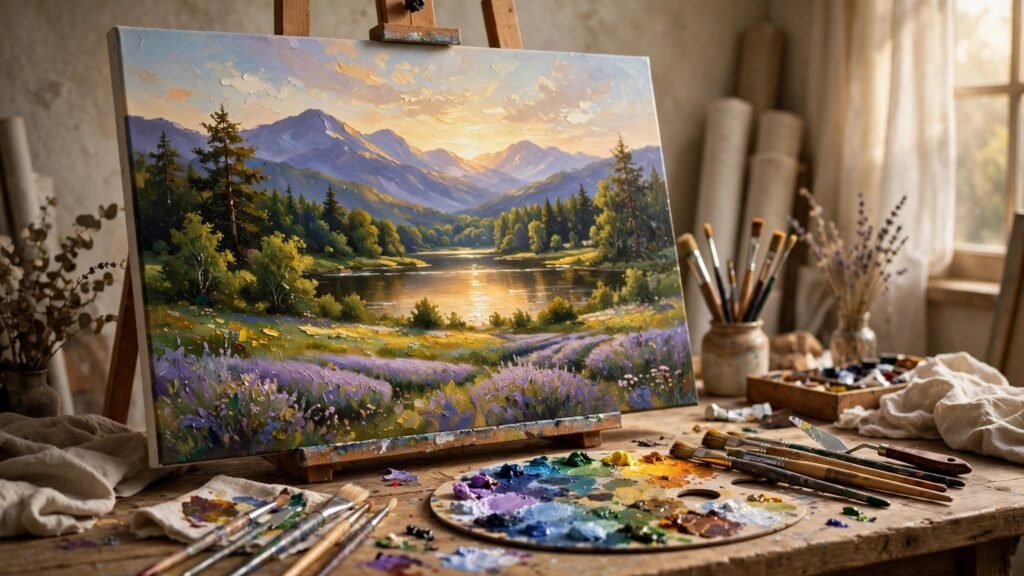
9 Stunning Oil Painting Landscape Ideas
Landscape painting is one of the most enjoyable ways to explore the beauty of nature through art. With oil paints, artists can create rich colors, soft transitions, dramatic skies, detailed trees, peaceful water reflections, and atmospheric mountains. Whether you are a beginner learning basic oil painting techniques or an experienced artist looking for fresh inspiration, landscape scenes offer endless creative possibilities.
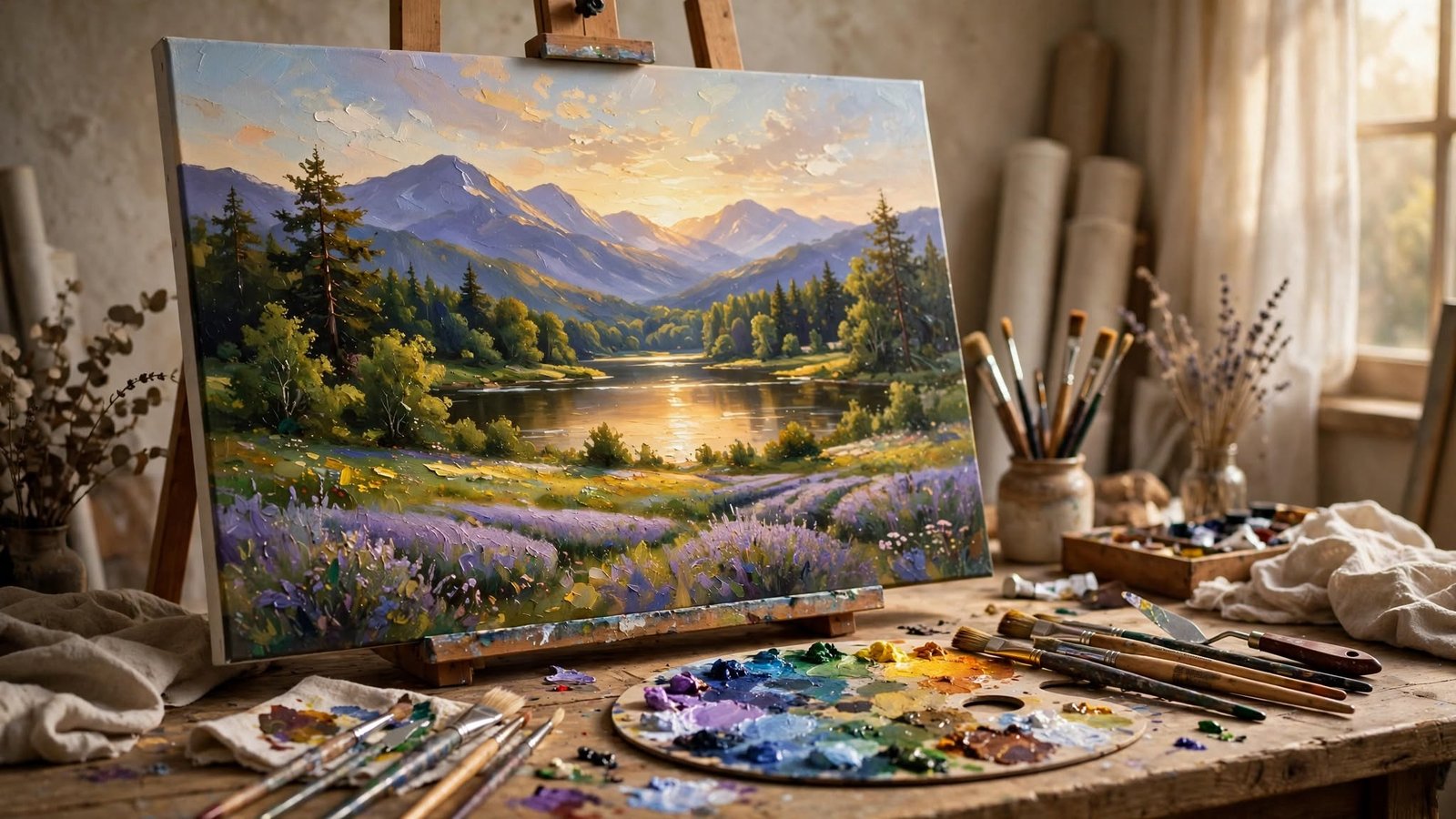
The beauty of oil painting landscape ideas is that they can be adapted to almost any skill level. You can start with a simple sunset, peaceful lake, or countryside path before moving toward more detailed mountain landscapes and forest scenes. Oil paint is especially useful for landscapes because its creamy texture allows you to blend colors gradually and build layers while the paint remains workable.
1. Peaceful Mountain Landscape
A mountain landscape is a timeless subject for oil painting because it allows you to experiment with depth, light, shadows, and atmospheric perspective. Begin with a soft sky using pale blue, white, lavender, or warm sunset colors. Place the tallest mountain forms farther into the background and use lighter, cooler colors to make them appear distant. In the foreground, introduce darker rocks, grass, or small plants to create depth.
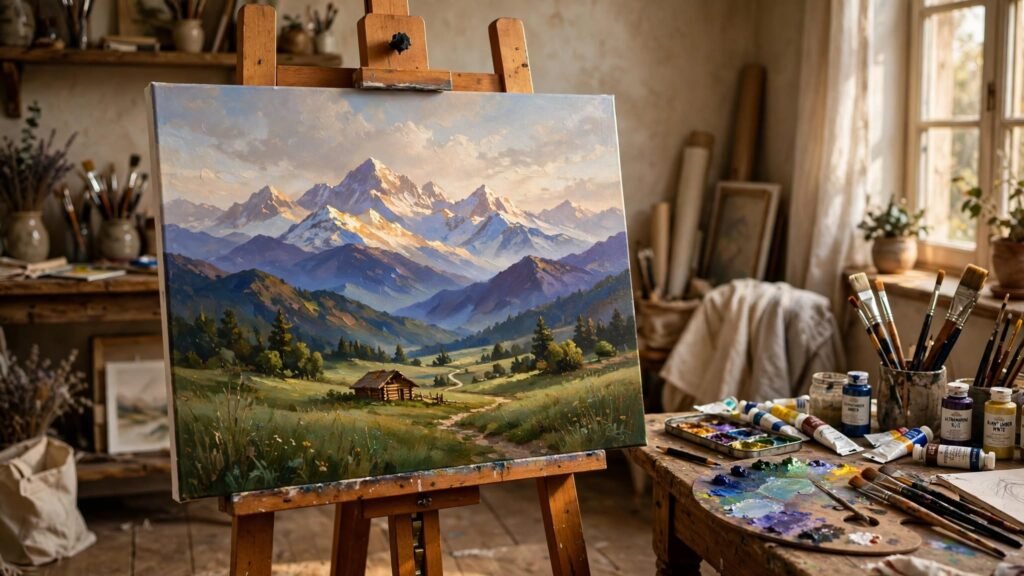
For a more dramatic painting, add sunlight touching the peaks while keeping some areas of the mountains in shadow. You can use a palette knife to create interesting rocky textures and a soft brush to blend the distant mountains. A small cabin, winding path, or tiny group of trees can provide a focal point without overwhelming the natural scenery. This is an excellent oil painting landscape idea for beginners because the composition can remain simple while still looking visually impressive.
Mountain scenes also give you plenty of freedom to experiment with different seasons and times of day. A snowy mountain range can create a cool and peaceful atmosphere, while a sunset behind the peaks can introduce warm oranges, pinks, and purples. You can also change the foreground to create a completely different composition, such as adding wildflowers, a river, a wooden fence, or a rocky trail. When painting distant mountains, avoid making every edge extremely sharp because softer edges help create the illusion of distance. For the foreground, stronger contrasts and thicker brushstrokes can make rocks, grass, and trees appear closer to the viewer. Looking for more inspiration? Explore these Oil Painting Ideas for Beginners and discover simple subjects to practice.
2. Golden Sunset Over a Lake
A golden sunset over a calm lake is another beautiful subject for oil painting. The main focus should be the relationship between the warm sky and the cool water. Start by painting the sky with shades of yellow, orange, peach, pink, and soft purple. Blend the colors carefully to create a gradual transition between the different tones. The lake can reflect the colors of the sunset using horizontal brushstrokes. You do not need to create a perfectly mirrored reflection; slightly broken strokes can make the water look more natural. Add silhouettes of distant trees or mountains along the horizon and place a few darker grasses or rocks in the foreground. This composition works particularly well when you want a relaxing painting with a warm, emotional atmosphere.
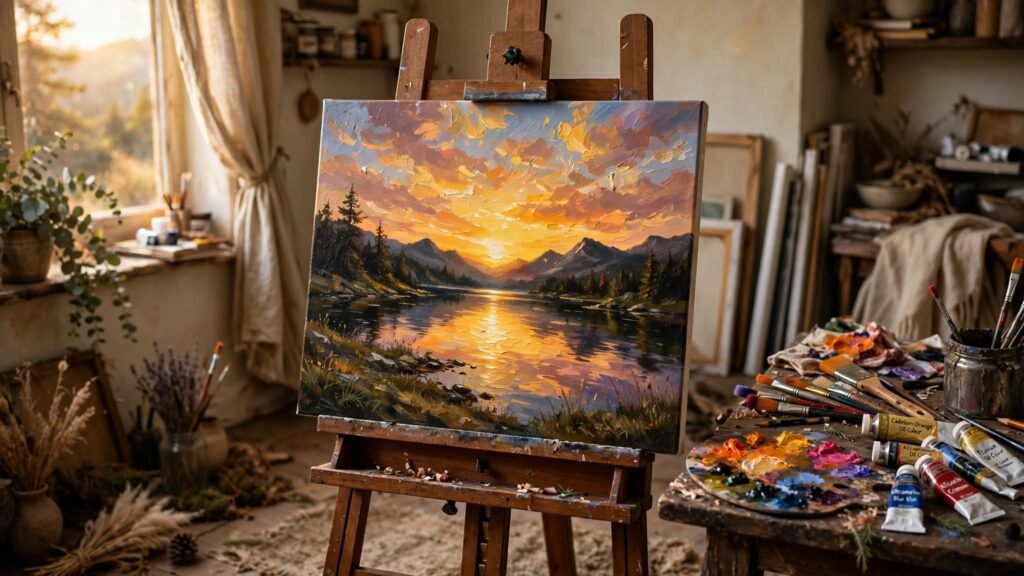
You can make a sunset lake painting even more interesting by introducing a clear focal point. A small boat, wooden dock, distant cabin, or group of birds can add scale and storytelling without distracting from the sunset. Pay attention to how the light changes as it moves across the water. The brightest reflection can usually be placed beneath or near the brightest part of the sky, while the edges of the lake can contain darker and cooler tones. When working with oil paint, blend the sky gradually but allow some visible brushwork to remain so the painting does not become overly smooth.
3. Enchanting Forest Path
A forest path can transform a simple landscape into a mysterious and inviting painting. Create tall trees along both sides of the composition, leaving an open path that leads the viewer toward the background. This natural pathway creates strong visual direction and gives the painting a sense of depth. Use different shades of green rather than relying on a single color. Combine deep forest green with olive, yellow-green, blue-green, and touches of warm brown. Sunlight filtering through the branches can add beautiful highlights to the ground. Small flowers, fallen leaves, rocks, or patches of grass can be included in the foreground for additional texture. For beginners, focusing on large tree shapes first and adding smaller details later can make the painting much easier to manage.
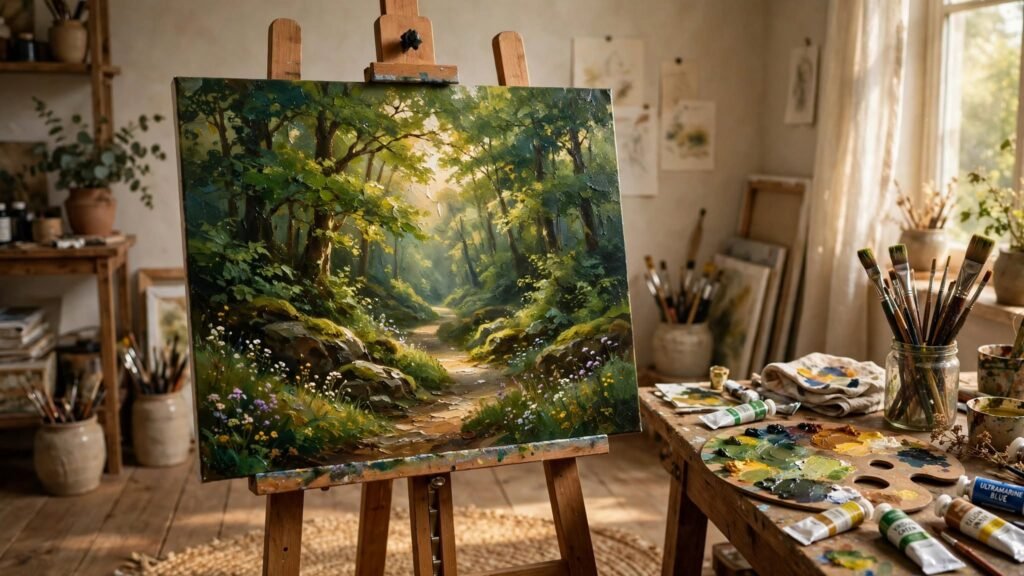
Another way to make a forest path visually appealing is to create a strong contrast between light and shadow. Imagine sunlight entering the forest through gaps between the branches and forming small illuminated areas along the pathway. These patches of light can naturally guide the viewer’s eye deeper into the painting. You can also experiment with different seasons. Green foliage creates a fresh summer scene, while orange and red leaves produce an autumn atmosphere. Keep the trees in the distance softer and less detailed than the trees in the foreground. Looking for more inspiration? Explore these Oil Painting Ideas for Beginners and discover simple subjects to practice.
4. Charming Countryside Scene
A peaceful countryside scene is perfect when you want to create a warm and relaxing oil painting. Imagine rolling green fields, a small farmhouse, a winding road, distant trees, and a large open sky. This type of composition does not require complicated details, making it suitable for artists who are still developing their landscape painting skills.
Divide the painting into several visual layers. Keep the distant fields lighter and less detailed while gradually increasing the contrast toward the foreground. A winding road can guide the viewer through the scene toward the farmhouse or horizon. Add small groups of trees and subtle shadows across the grass to prevent the landscape from looking flat. Warm sunlight during early morning or late afternoon can give the entire painting a welcoming countryside atmosphere.
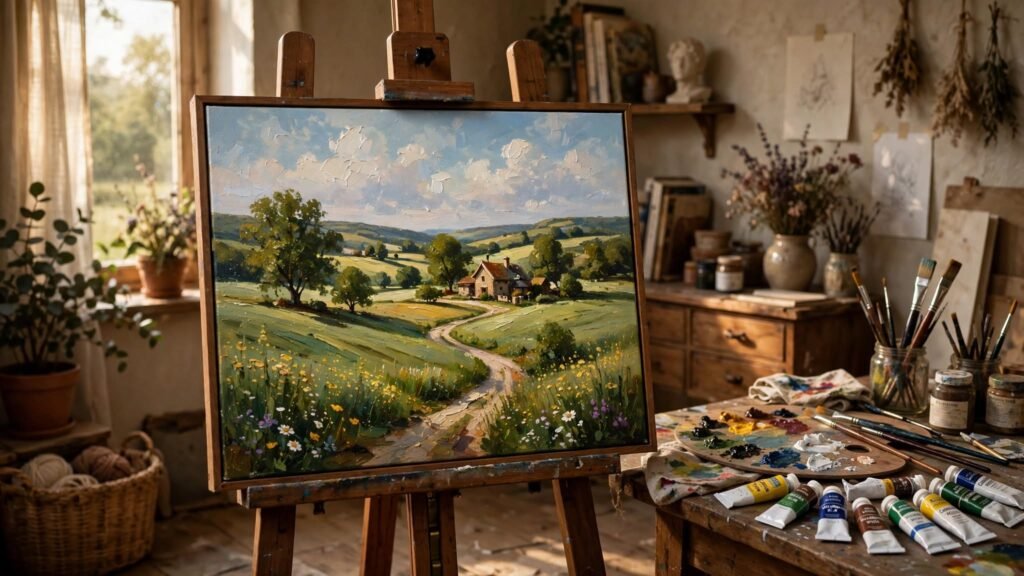
You can personalize a countryside painting by changing the season, architecture, and vegetation. A small farmhouse with a red roof can become a colorful focal point, while a stone cottage can create a more traditional rural appearance. Consider adding a wooden fence, hay bales, flowering plants, grazing animals, or a bicycle beside the road. These small elements can make the landscape feel lived-in without requiring excessive detail. When painting fields, avoid making every section the same shade of green. Mix yellow, blue, brown, and white into your greens to create natural variation.
5. Dramatic Ocean Waves
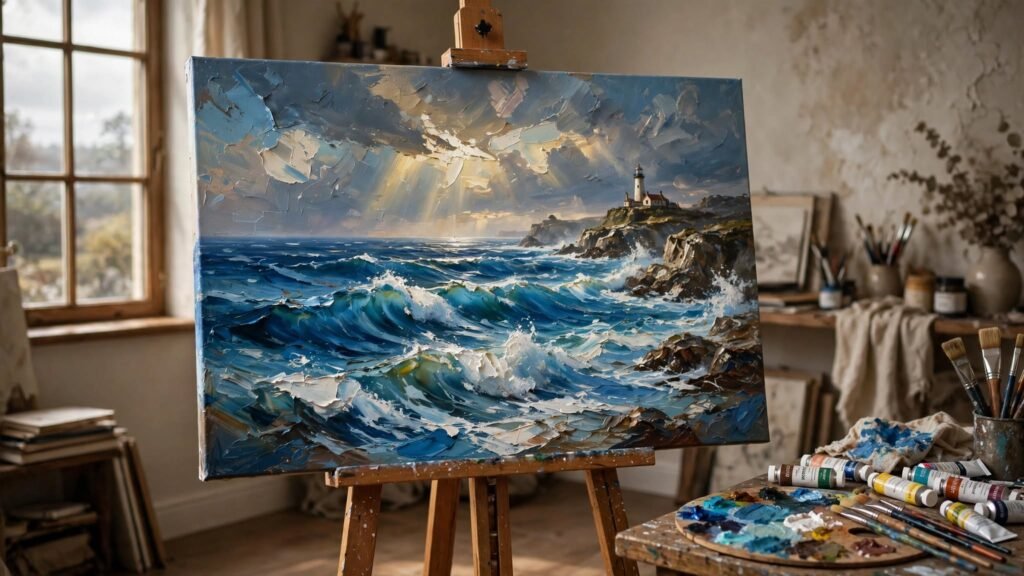
For artists who enjoy movement and texture, an ocean landscape can be an exciting oil painting project. Waves allow you to experiment with thick paint, palette-knife techniques, foam, highlights, and energetic brushwork. Begin with a distant horizon and build the ocean using layers of blue, turquoise, green, gray, and white. The most important part is creating movement in the water. Use horizontal strokes for distant waves and more expressive curved strokes as the waves approach the foreground. White paint can be added selectively to represent foam catching the sunlight. You can also include a rocky coastline or small lighthouse to create a focal point. A dramatic cloudy sky can make the scene even more powerful while contrasting with the lighter ocean foam.
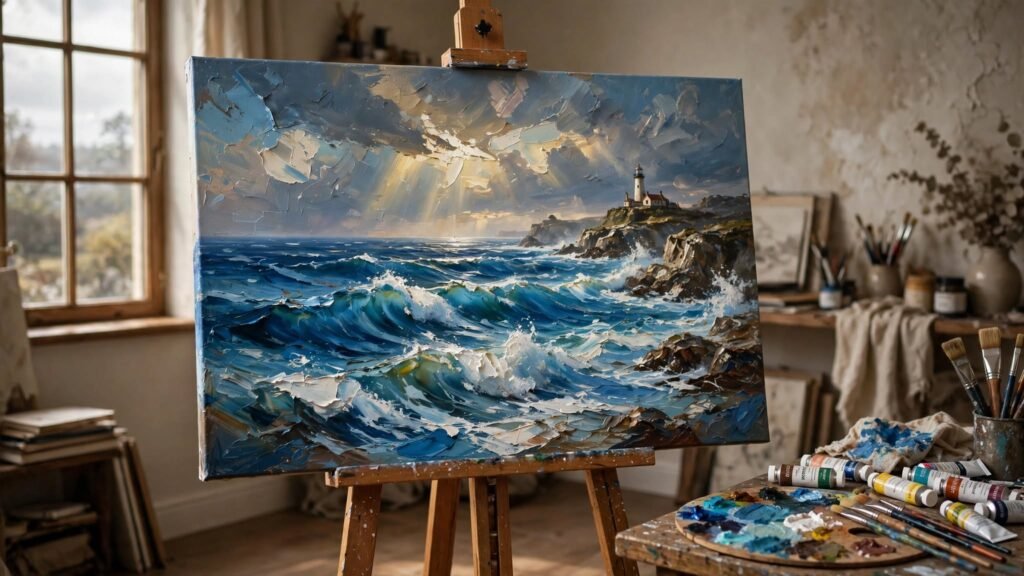
When painting ocean waves, remember that water does not have to be painted as hundreds of individual lines. Instead, concentrate on the overall direction and rhythm of the waves. Large areas of darker blue can establish the body of the ocean, while lighter turquoise and white can be layered on top to suggest movement and foam. A palette knife is particularly useful for creating thick highlights along the crest of a wave. You can also vary the thickness of the paint to create physical texture on the canvas. For a calmer scene, use softer waves and lighter colors.
6. Autumn Forest Landscape
Autumn provides some of the most colorful inspiration for landscape artists. Instead of using only green foliage, you can work with combinations of golden yellow, orange, red, burgundy, brown, and muted green. These warm colors create an inviting seasonal atmosphere and give your oil painting plenty of visual interest. Try arranging trees around a small pathway, stream, or open clearing. Use darker tree trunks to separate the colorful foliage and create contrast. Leaves can be painted with individual brush dabs rather than carefully drawing every leaf. This technique creates natural-looking texture while saving time. A little blue or purple in the distant background can help create atmospheric depth and prevent the warm colors from becoming too overwhelming.
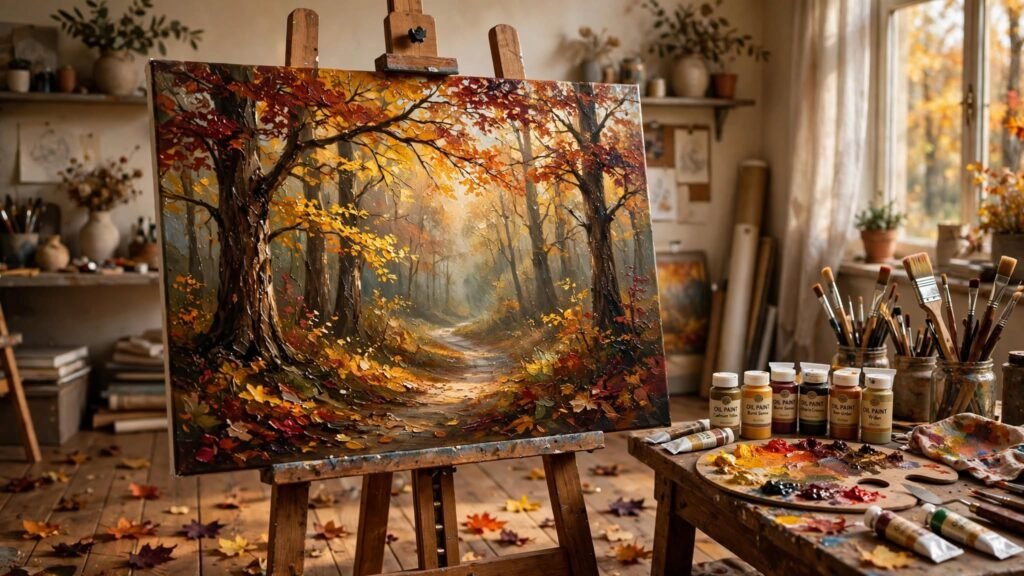
Autumn landscapes are also excellent for practicing color harmony because nature provides many related warm shades. You can create depth by placing bright golden and orange foliage closer to the foreground while using muted colors farther away. Fallen leaves scattered along a path or beside a stream can connect the foreground to the background. Try using different brush shapes to create foliage, including round brushes for soft clusters and flat brushes for sharper leaf marks. You do not need to paint every leaf individually. Looking for more inspiration? Explore these Oil Painting Ideas for Beginners and discover simple subjects to practice.
7. Misty Mountain Morning
A misty mountain morning offers a softer and more atmospheric approach to landscape painting. Instead of strong contrasts and bright colors, focus on subtle layers of gray, blue, lavender, and muted green. Distant mountains should appear soft and slightly faded, while foreground objects can have stronger shapes and darker values. To create the effect of mist, avoid outlining every mountain or tree. Allow some colors to blend into the surrounding atmosphere. You can place a quiet lake or valley beneath the mountains and add a few dark trees in the foreground. This contrast between soft distant forms and sharper foreground elements creates convincing depth. The result can be a peaceful painting that feels calm, spacious, and almost dreamlike.
This type of landscape is particularly useful for learning atmospheric perspective. As objects move farther away, reduce their contrast and detail so they visually blend with the surrounding air. You can build the mountains in several thin layers rather than applying one thick layer of paint. Soft brushes can help merge transitions between mountain shapes and mist, while a clean brush can gently soften selected edges. A small lake or valley in the lower portion of the painting can provide a reflective surface and strengthen the sense of distance. Keep the foreground slightly darker so the misty background remains the main focus.
8. Cozy Cottage by the River
A small cottage beside a river can combine architecture and nature in one charming landscape composition. Place the cottage slightly away from the center so that the surrounding environment remains an important part of the painting. A river flowing from the foreground toward the background can naturally lead the viewer’s eye through the scene. Use warm colors for the cottage to make it stand out against cooler greens and blues. You can add a small bridge, flowering plants, trees, stones, or a wooden fence around the property. Reflections in the river can be painted with broken horizontal strokes instead of perfectly copying every object. This gives the water a natural appearance while allowing the painting to retain an expressive oil-painting style.
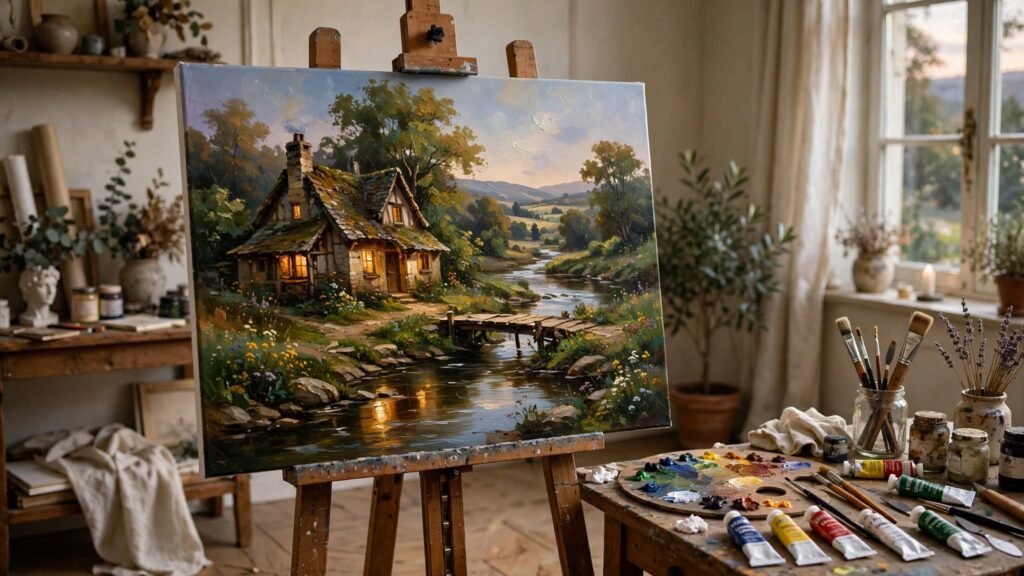
You can change the mood of the cottage scene simply by adjusting the lighting. Morning light can create a fresh and peaceful appearance, while evening light can make the windows glow warmly against the surrounding landscape. Consider adding smoke rising gently from the chimney to suggest a cozy atmosphere. The river can be used as a leading line, beginning strongly in the foreground and narrowing toward the distant horizon. This creates natural perspective and makes the composition more immersive.
9. Lavender Field at Sunset
A lavender field at sunset is a colorful landscape idea that combines repeating patterns with dramatic natural light. Paint long rows of lavender leading toward a distant farmhouse, mountain, or tree line. The rows can create perspective and guide attention toward the horizon. Use purple, violet, blue, pink, and green across the field, then introduce warm golden and orange tones in the sky. The contrast between the cool lavender field and warm sunset can make the painting especially eye-catching. You do not need to paint every individual flower. Small grouped brushstrokes are enough to suggest hundreds of lavender plants. For an extra focal point, include a narrow pathway through the field or a small wooden bench in the foreground.
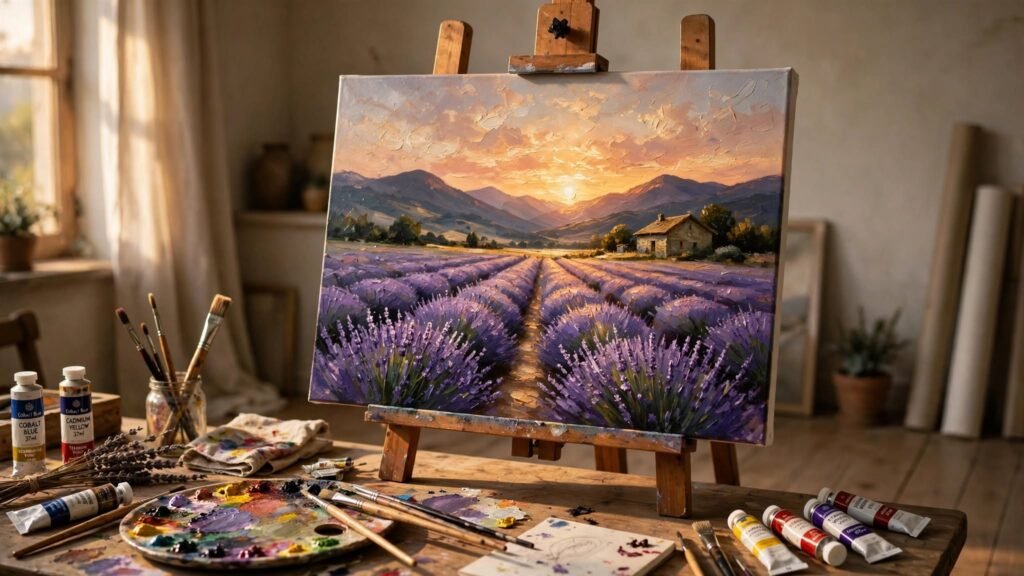
Lavender fields are especially useful for artists who want to practice repeating shapes and color relationships. Keep the foreground flowers larger and more detailed, then make the rows progressively smaller as they approach the horizon. This creates a strong sense of perspective without requiring complicated drawing techniques. You can use several purple shades rather than a single violet color, mixing blue, white, pink, or a small amount of red to create variation. Warm sunlight can be added to the tops of the plants, while darker purple strokes underneath create depth.
How to Make Your Oil Painting Landscapes More Attractive
Creating an attractive landscape is not only about choosing a beautiful subject. Composition, color, light, perspective, and texture all contribute to the final result. Before you begin, decide where you want the viewer’s eye to go. A winding road, river, pathway, mountain ridge, or line of trees can help create a natural visual journey through the painting.
Color temperature is another important element. Warm colors such as yellow, orange, and red can bring objects visually forward, while cooler blues, greens, and purples can help create distance. This does not mean you need to follow a strict formula, but understanding warm and cool colors can make your landscape feel more dimensional.
Layering is especially useful with oil paints. Begin with the larger background shapes before gradually adding middle-ground and foreground elements. Avoid covering the entire canvas with tiny details too early. Large shapes establish the structure of the painting, while smaller details can be added near the end.
Finally, remember that a landscape does not have to look photographically perfect. Expressive brushstrokes, visible texture, simplified trees, and creative color choices can give your artwork personality. Use these ideas as starting points and experiment with your own combinations of colors, lighting, and compositions.
Conclusion
Oil painting landscapes provide endless opportunities to explore nature, color, atmosphere, and personal creativity. From peaceful mountains and golden lakes to colorful autumn forests and lavender fields, each subject offers a different way to practice essential painting skills. Beginners can start with simpler compositions such as countryside scenes or sunsets, while more experienced artists can experiment with dramatic oceans, misty mountains, and complex forest environments. The key is to focus on the main shapes and overall composition before adding smaller details. Oil paints are especially enjoyable for landscapes because their slow drying time gives artists the opportunity to blend colors, soften edges, build texture, and make adjustments as they work. With patience and regular practice, even a simple landscape can become a beautiful piece of artwork.
When choosing your next project, think about the type of mood you want your painting to communicate. Warm sunset colors can create a peaceful and inviting feeling, while cool blues and misty grays can make a scene feel quiet and atmospheric. Bright autumn colors can bring energy, while a simple green countryside can create a relaxing natural mood. Try changing the season, weather, time of day, or color palette of the same landscape idea to create completely different results. You can also combine elements from several ideas, such as placing a cottage beside a mountain lake or adding an autumn forest around a winding river. These combinations allow you to move beyond copying references and begin developing your own artistic style. Before starting your next landscape, make sure you have the essential oil painting supplies needed for a comfortable and creative painting setup.