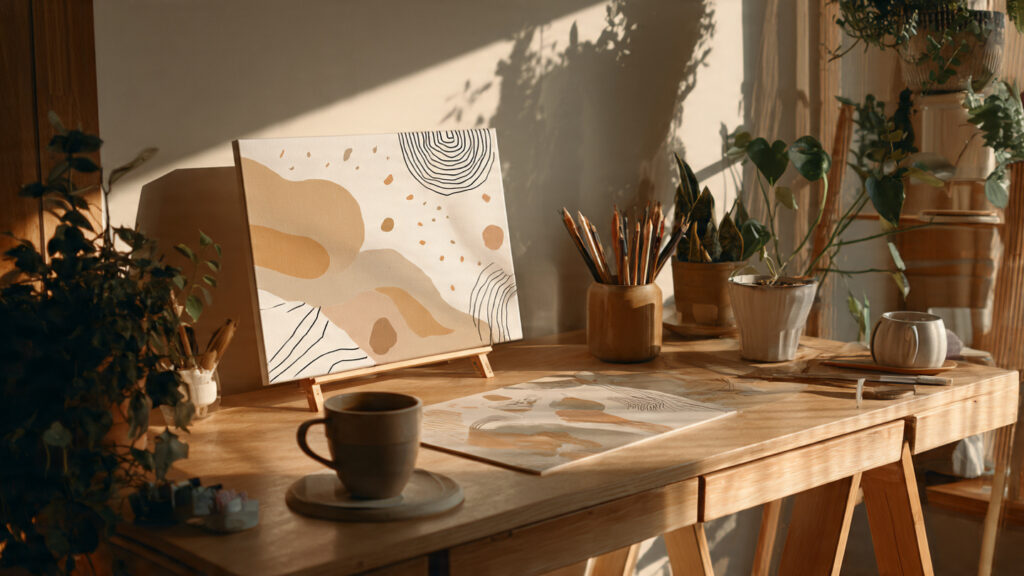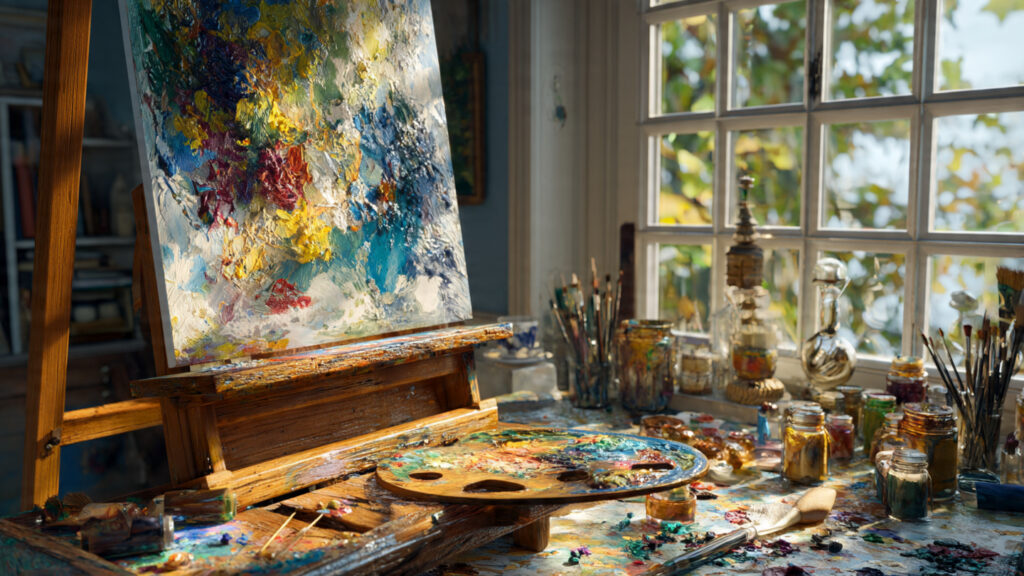
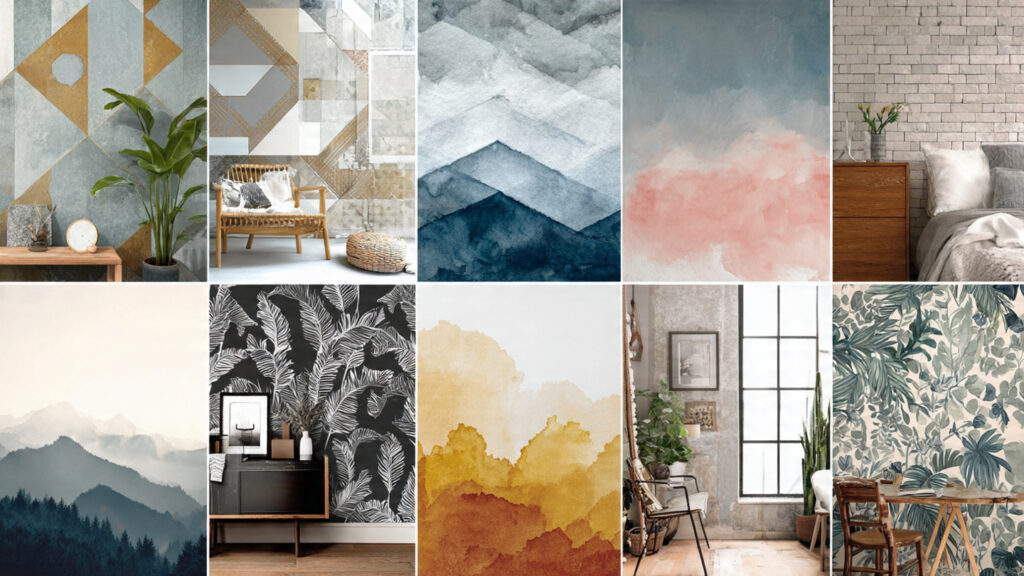
Stunning Wall Decor Painting: 13 Ideas to Transform Your Home
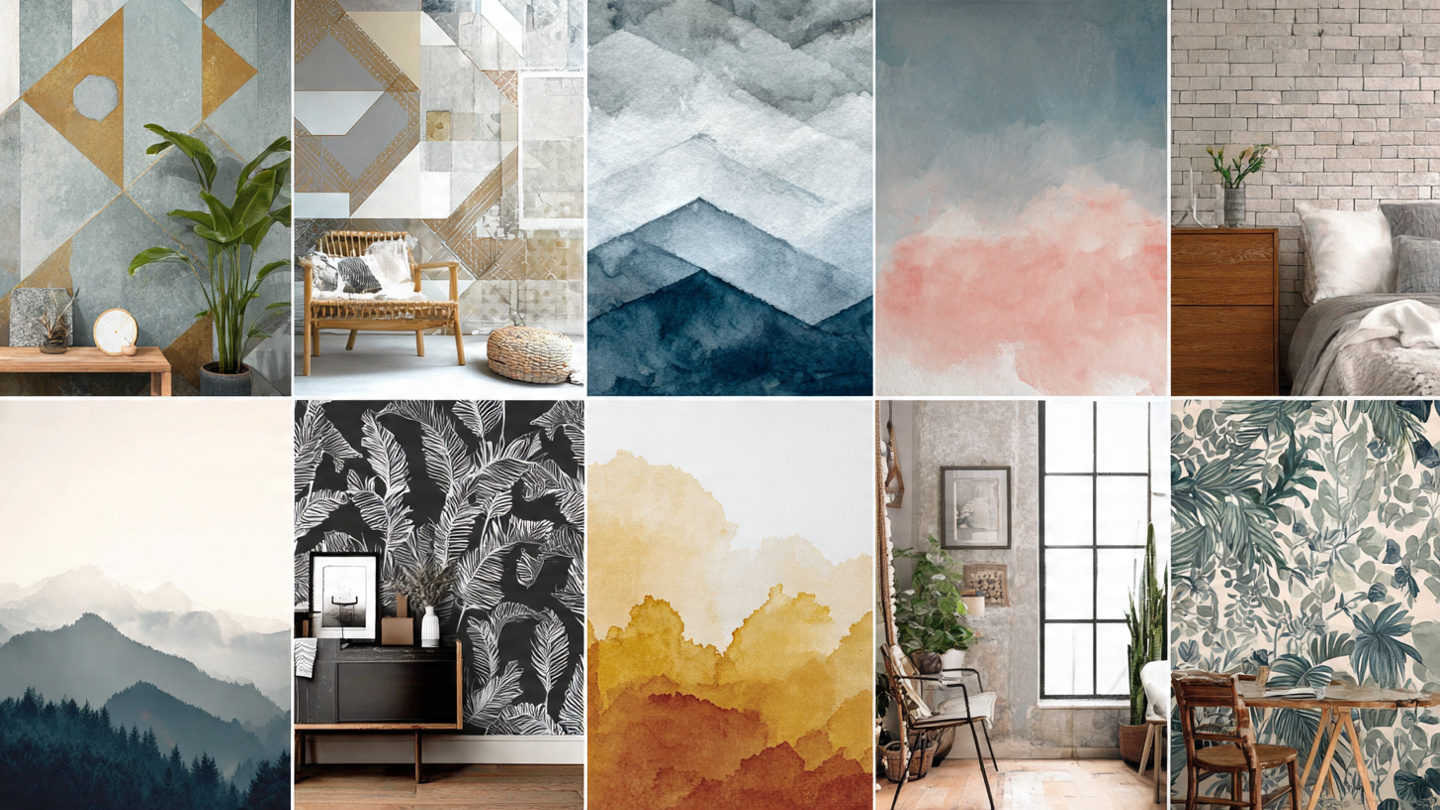
Looking to refresh your living space without spending a fortune? These 13 wall decor painting ideas will help you transform plain walls into artistic statements full of personality and charm. Whether you love minimalist modern designs, bold abstract art, cozy farmhouse vibes, or nature-inspired murals, this detailed guide covers creative, budget-friendly, and beginner-friendly wall painting ideas for every room. Each idea includes step-by-step inspiration and carefully crafted image prompts to help you visualize or generate your perfect design. From geometric accent walls to hand-painted botanical murals, these artistic wall decor concepts will inspire your next DIY project and elevate your home décor effortlessly.
Introduction
Wall decor painting is one of the most powerful ways to redefine your home’s atmosphere. A thoughtfully painted wall can completely change the mood of a room — making it feel bigger, warmer, cozier, or more luxurious. Unlike expensive wallpaper or complicated renovation projects, painted wall art is accessible, customizable, and deeply personal. In this blog post, you’ll discover 13 creative and practical wall decor painting ideas suitable for bedrooms, living rooms, hallways, home offices, and even small apartments. Each concept is explained in detail, along with an AI-ready image prompt to help you visualize the design or generate reference images for your project. Whether you’re a beginner or an experienced DIY enthusiast, there’s something here for everyone.
1. Modern Geometric Accent Wall
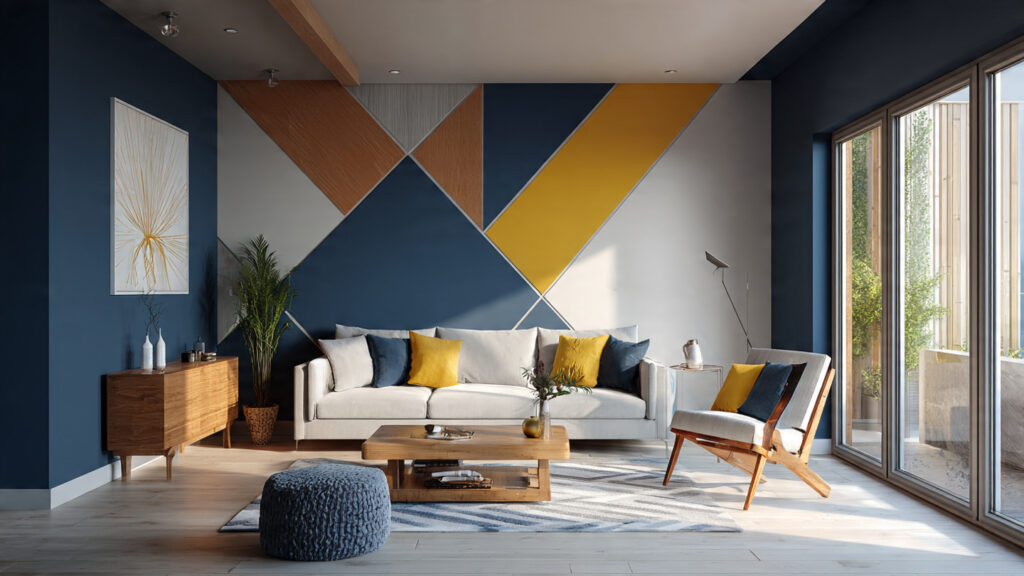
Geometric wall painting is not just about shapes — it’s about balance and visual rhythm. When planning your design, start by selecting a cohesive color palette that complements your existing furniture and décor. Neutral-based palettes with one bold accent shade tend to look timeless, while multi-color combinations create a playful and energetic vibe. Before applying paint, sketch your pattern on paper and measure your wall carefully to maintain symmetry. Use high-quality painter’s tape to ensure sharp lines and prevent color bleeding. Removing the tape while the paint is slightly damp helps achieve crisp edges.
Another way to elevate a geometric accent wall is by incorporating metallic paints such as gold or copper for subtle highlights. Thin metallic lines between shapes can add a luxurious and contemporary feel. If you prefer a softer look, opt for muted pastel tones arranged in organic geometric forms rather than strict triangles. This style works especially well in modern apartments, creative studios, and teen bedrooms where artistic expression meets structure. Lighting also plays an important role — directional wall lighting can enhance the depth and contrast of geometric patterns beautifully.
2. Botanical Leaf Wall Painting
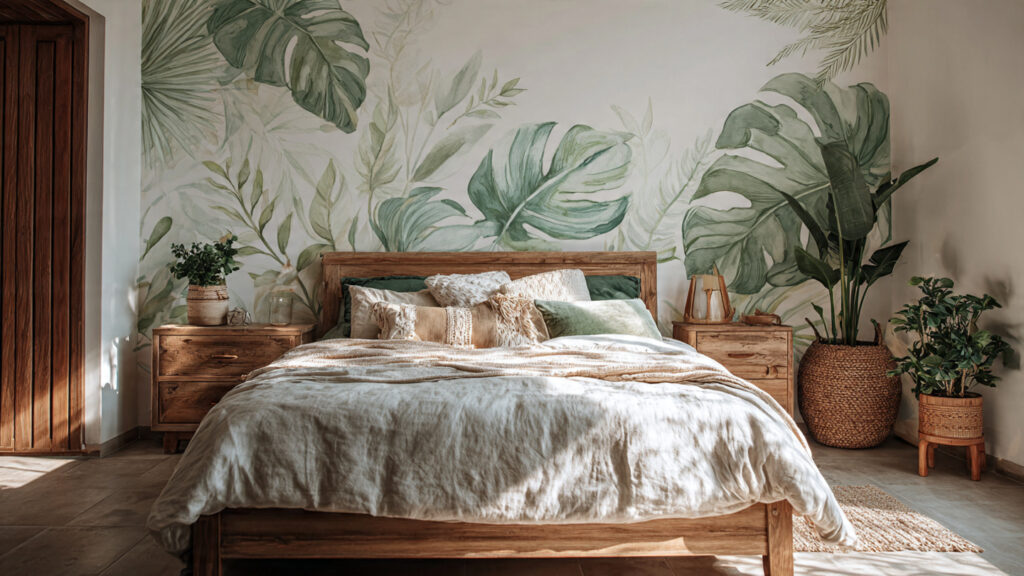
Botanical murals create a soothing environment by mimicking natural surroundings. When designing your leafy wall, consider layering different shades of green to add realism and depth. Start with lighter tones for base leaves and add darker shadows along the edges. This subtle shading technique gives the illusion of dimension and movement. You can also mix various leaf shapes, such as monstera, palm, or eucalyptus, to create a dynamic arrangement rather than repeating a single pattern.
For smaller spaces, consider painting leaves only in one corner and letting them flow diagonally upward. This prevents the room from feeling crowded while maintaining visual interest. Adding soft beige or warm cream backgrounds enhances the natural aesthetic. Botanical wall art pairs beautifully with wooden furniture, woven textures, and neutral linens. To complete the look, incorporate indoor plants that echo the painted design, creating harmony between real and illustrated greenery. This style promotes calmness and is ideal for relaxation-focused spaces.
3. Abstract Texture Wall Art
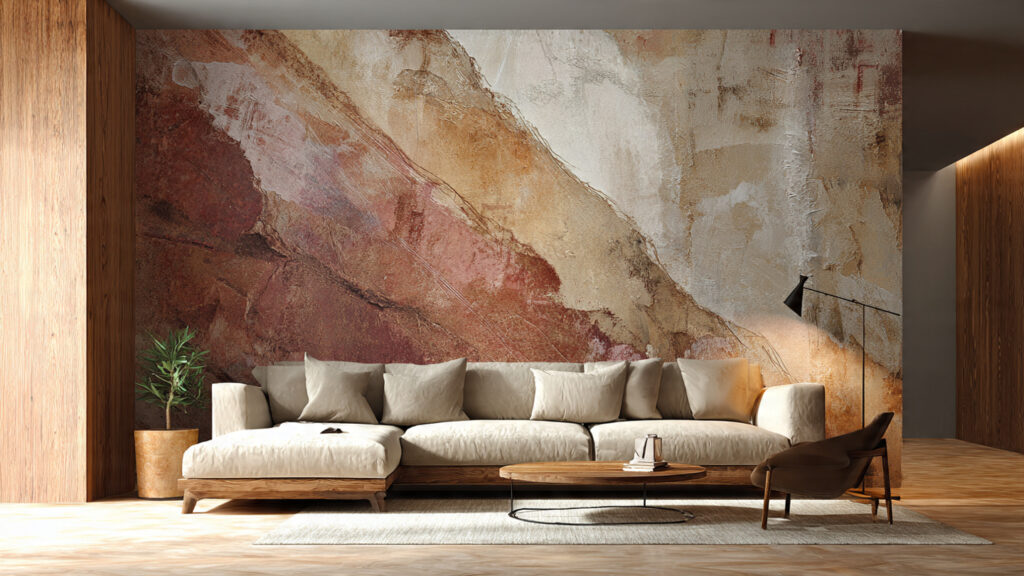
Abstract texture painting allows you to experiment freely without strict design rules. Using tools like sponges, palette knives, dry brushes, or even cloth pieces can create unique textures. Apply paint in layers, allowing each layer to partially dry before adding another to build complexity. Blending two complementary colors creates a harmonious yet expressive backdrop that feels artistic rather than chaotic.
Lighting dramatically enhances textured walls. Soft side lighting creates shadows that emphasize brush strokes and depth. Consider warm earthy tones for cozy living rooms or cool neutrals for contemporary spaces. This painting style is perfect for those who want a gallery-inspired interior without hanging artwork. The wall itself becomes the masterpiece. Textured finishes also help conceal minor wall imperfections, making them practical as well as beautiful.
4. Mountain Landscape Mural
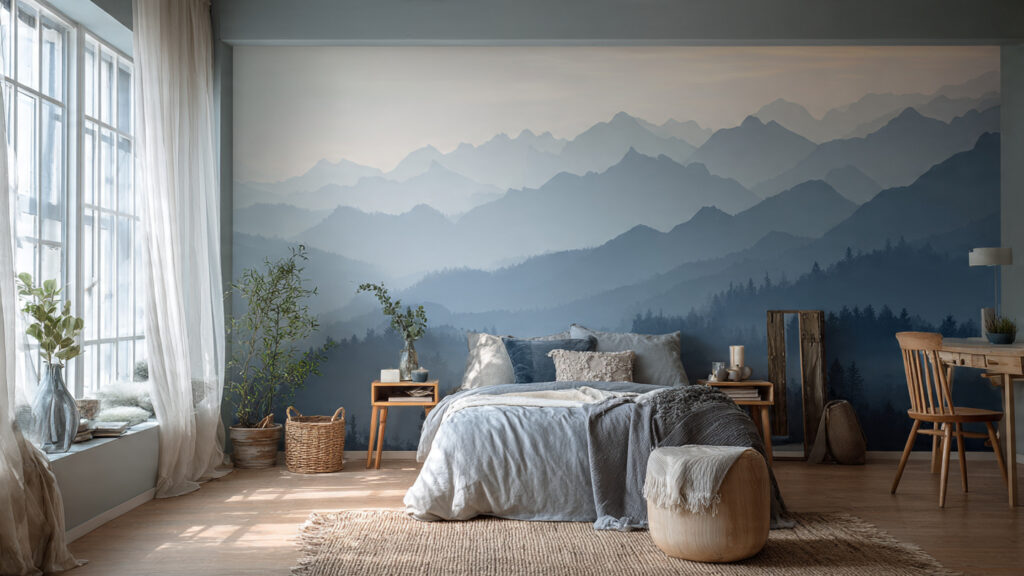
To create a realistic mountain mural, begin by sketching light outlines with a pencil. Paint the farthest mountains in lighter tones to create depth and perspective. Gradually use darker shades for foreground peaks. Adding subtle white highlights to mountain tops can mimic snow and enhance realism. A blended gradient sky transitioning from pale peach to soft blue adds warmth and dimension.
This mural style is excellent for promoting tranquility and spaciousness. In small rooms, horizontal mountain lines can visually widen the space. Pair the mural with soft textiles like wool throws and neutral bedding to complement the outdoor-inspired theme. Adding small silhouette trees or birds can enhance storytelling within the mural. It’s an ideal design for nature lovers and those seeking a peaceful retreat inside their home.
5. Half-Painted Wall Design
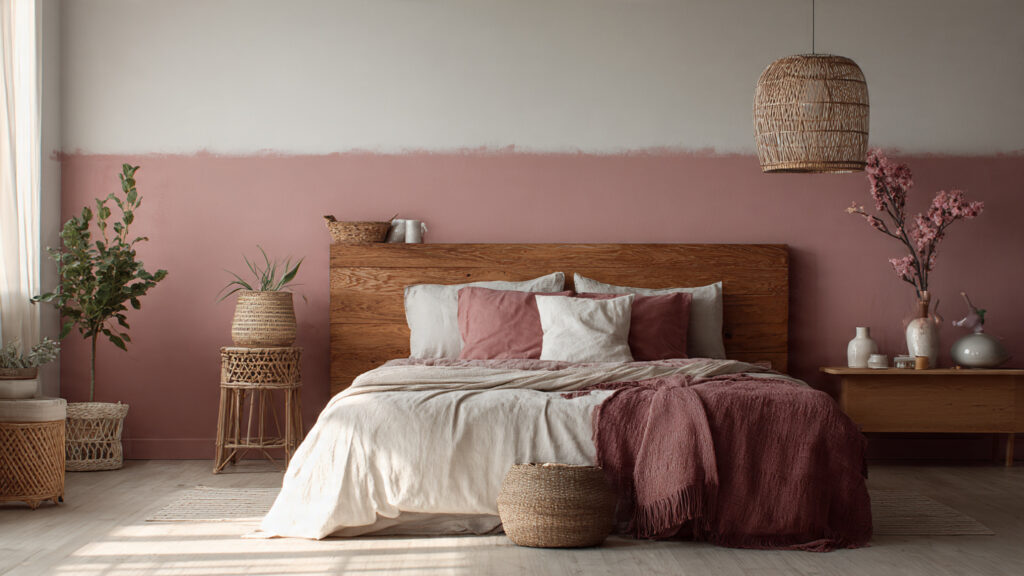
Half-painted walls are visually grounding because they create a strong horizontal anchor in the room. Darker colors on the lower half add coziness and protect walls from scuffs, especially in hallways or children’s rooms. You can experiment with curved divisions or diagonal separations for a more artistic touch instead of straight lines.
For added dimension, try pairing matte paint on the top half with a satin or eggshell finish on the bottom half. This subtle texture contrast enhances visual appeal. Consider muted terracotta, sage green, or dusty blue for a modern yet timeless look. The half-painted technique is budget-friendly, beginner-friendly, and adaptable to both contemporary and classic interior styles.
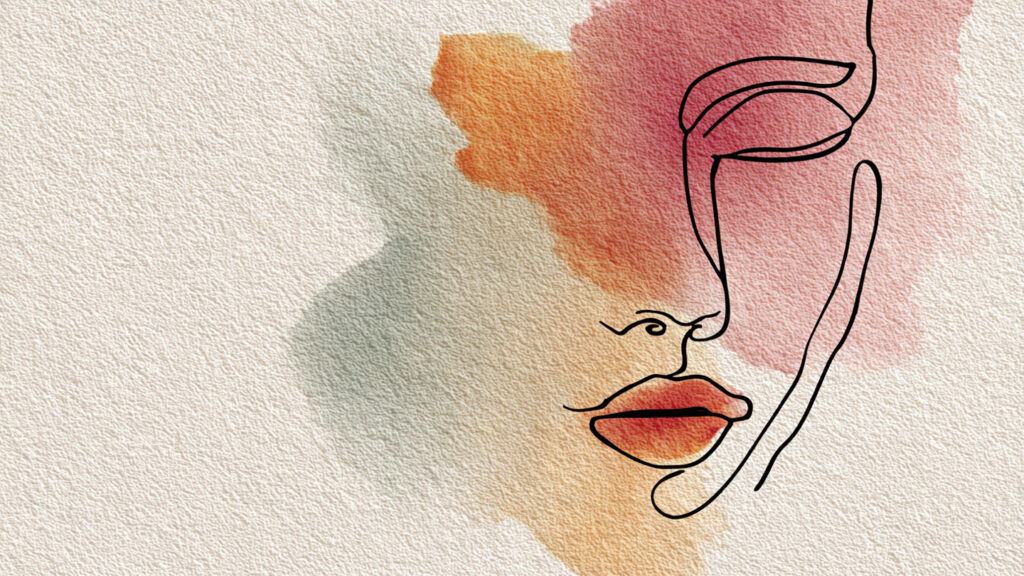
6. Minimalist Line Art Wall Painting
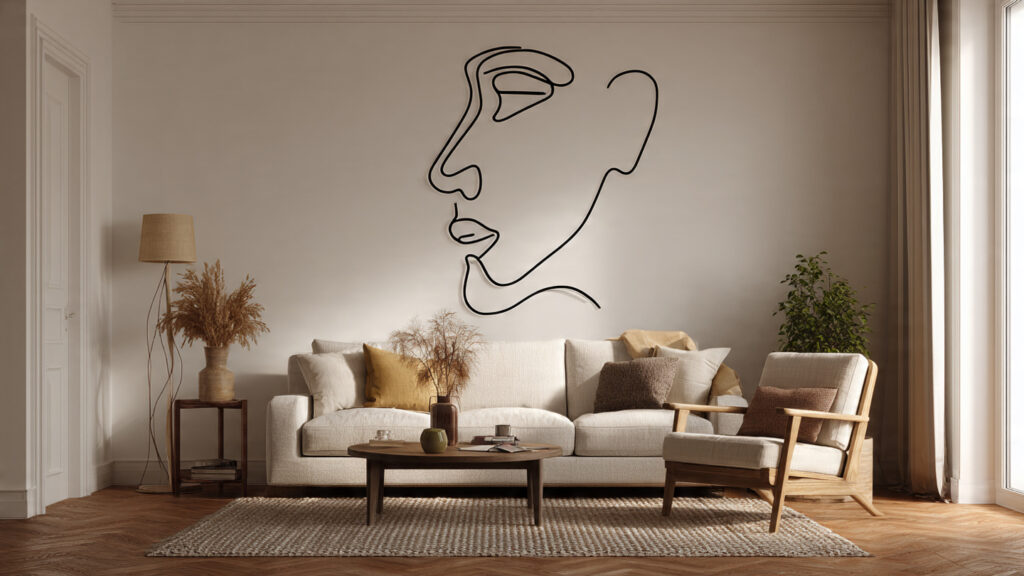
Minimalist line art focuses on simplicity and intentional design. Inspired by modern art movements and artists like Henri Matisse, this style emphasizes fluid lines and expressive shapes. Use a fine brush and steady hand to create continuous outlines without lifting the brush. Practice on paper before transferring your design to the wall.
To enhance elegance, keep the surrounding décor neutral and uncluttered. Black lines on white walls create high contrast, while soft beige backgrounds offer warmth. You can frame the painted art with subtle painted borders for a gallery-inspired look. This style works beautifully in apartments, studios, and minimalist homes where clean aesthetics are prioritized.
7. Rustic Brick Effect Painting
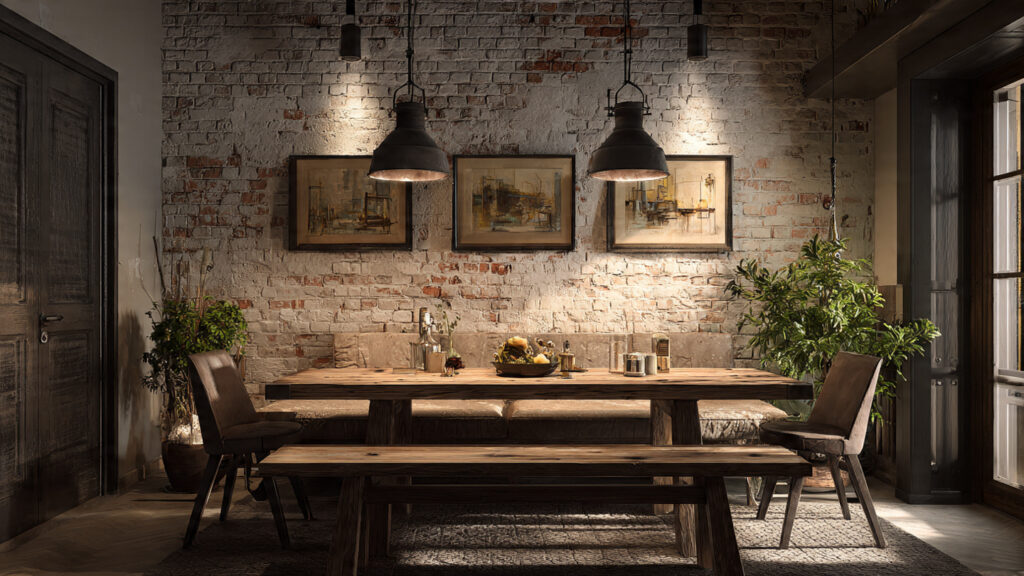
A faux brick wall can transform modern interiors into cozy industrial spaces. Start by measuring and marking brick shapes evenly using a level. Apply a base coat and then use a sponge to dab varied shades of red, brown, and gray for realism. Adding subtle white highlights gives the illusion of aged texture. Whitewashed brick effects create farmhouse charm and brighten small rooms. This style pairs well with metal light fixtures, wooden beams, and vintage décor elements. It’s a cost-effective alternative to installing real brick and allows complete customization of color and texture intensity.
8. Galaxy Night Sky Wall
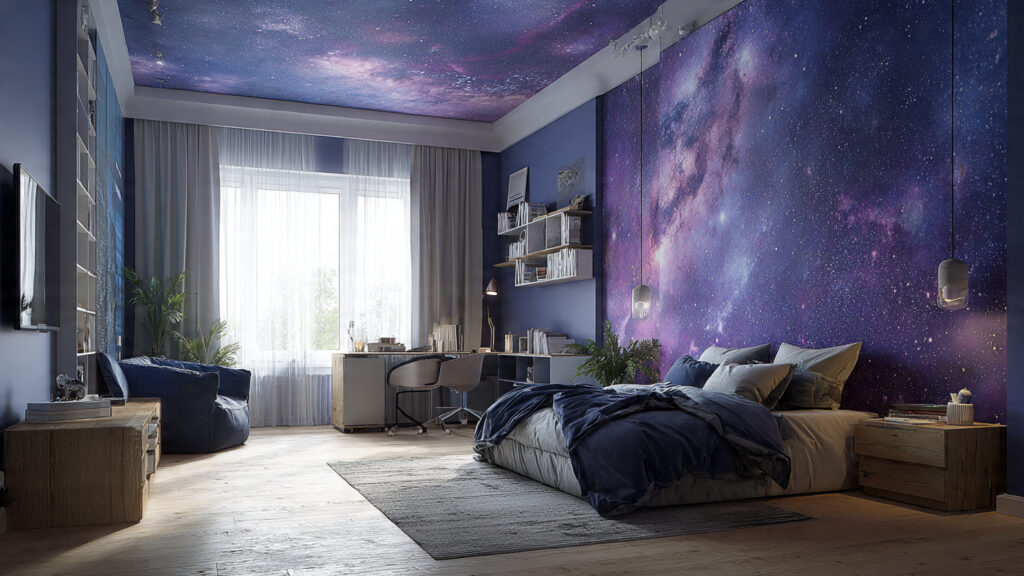
Creating a galaxy wall requires blending techniques for depth. Use circular motions with a sponge to layer purples, blues, and hints of pink. Splatter white paint lightly for stars and add small clusters to mimic constellations. Metallic silver accents can create shimmering effects. Glow-in-the-dark paint can add an interactive feature, especially in children’s rooms. This design sparks imagination and creativity while serving as a bold statement wall. Pair with dark bedding and soft LED lighting to enhance the cosmic theme.
9. Ombre Gradient Wall
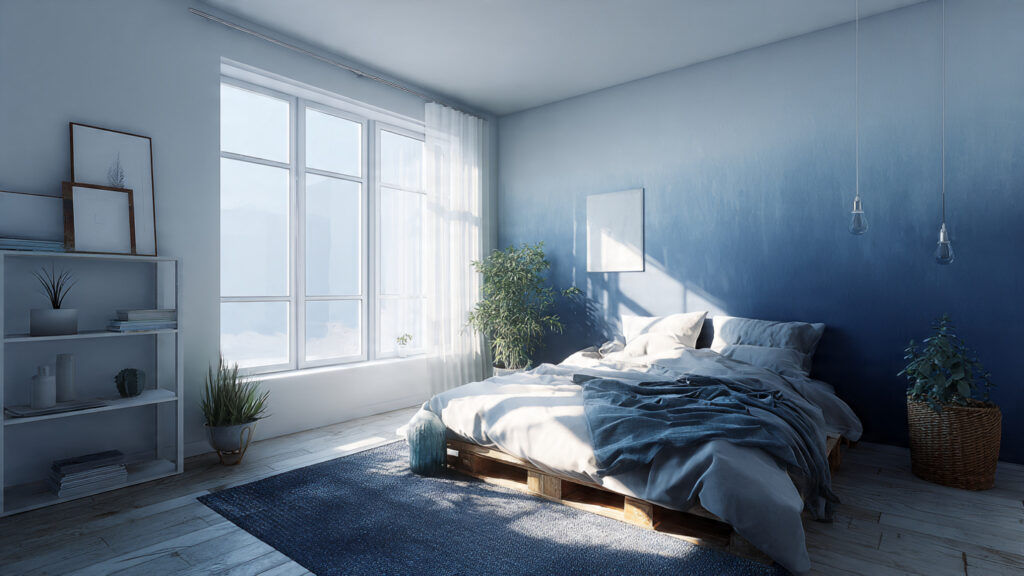
Ombre walls require smooth blending techniques. Divide the wall into sections and gradually mix the colors at the meeting points using a damp sponge or dry brush. Work quickly before the paint dries to ensure seamless transitions. Choose calming tones like blue or green for bedrooms and warmer hues like peach or coral for living spaces. Ombre designs soften harsh walls and create subtle sophistication. This method works beautifully in modern homes and rental spaces seeking elegant updates.
10. Floral Statement Wall
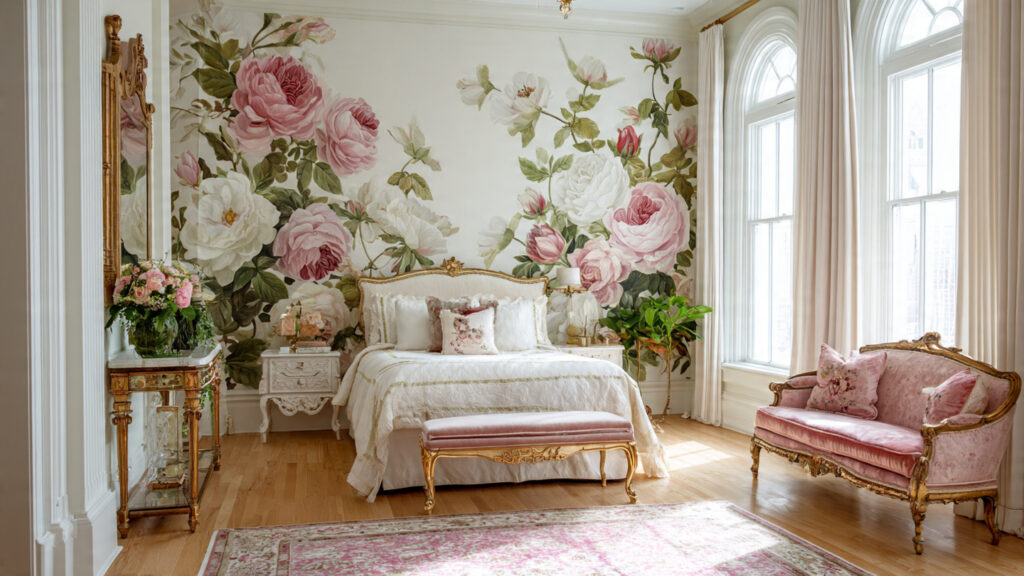
Large floral murals require careful scaling. Sketch oversized petals lightly before painting. Use shading techniques to add depth and realism to petals and leaves. Soft blended backgrounds enhance the romantic feel. Pair floral walls with vintage furniture and gold accents for a classic aesthetic. Alternatively, choose bold floral colors for contemporary interiors. This style adds personality and warmth, making the room feel artistic and inviting.
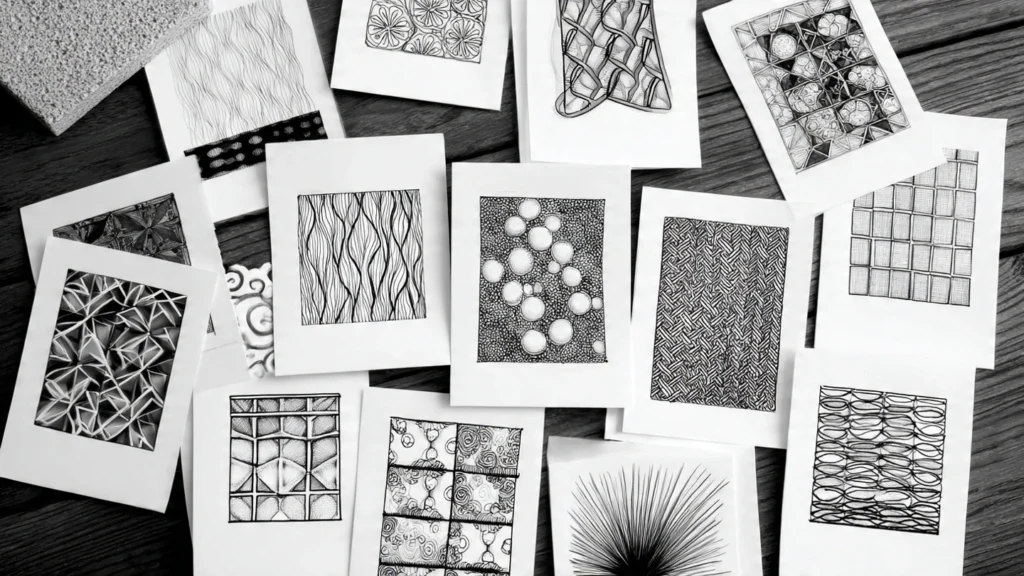
11. Black and White Pattern Wall
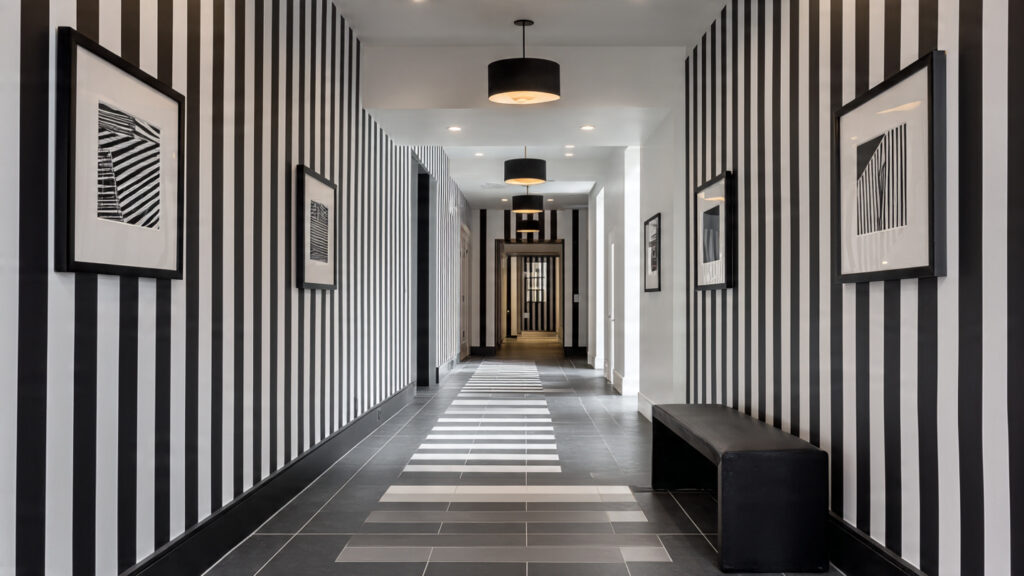
Black and white patterns create a striking contrast. Use stencils for precise repetition and measure carefully to maintain alignment. Geometric grids or vertical stripes can make ceilings appear taller. Balance bold patterns with minimal décor to avoid visual overload. This timeless color scheme adapts easily to changing furniture styles. Adding small pops of color through accessories keeps the space dynamic while preserving monochrome elegance.
12. Artistic Quote Wall Painting
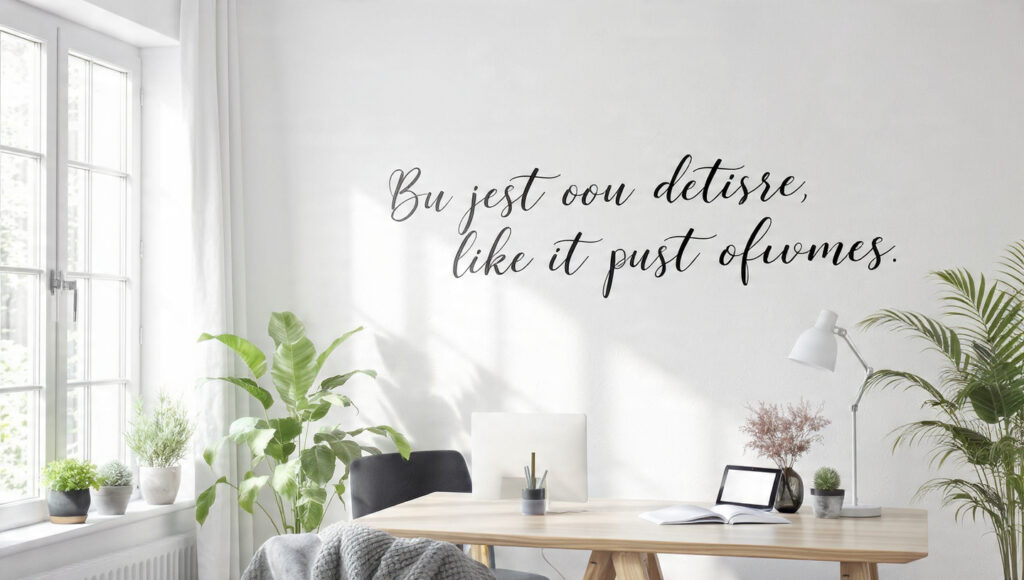
Before painting a quote, print the text in your chosen font and trace it using transfer paper. This ensures consistent spacing and alignment. Choose motivational phrases that reflect your personality or lifestyle. Use metallic or contrasting colors to highlight key words. Keep the surrounding décor simple to allow the quote to remain the focal point. Quote walls inspire positivity and add emotional depth to interior design.
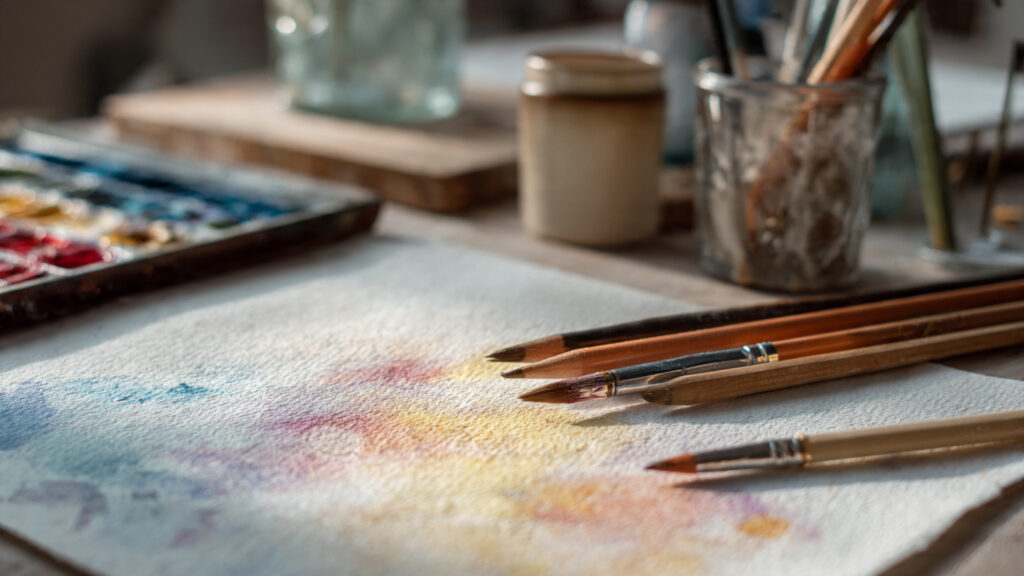
13. Watercolor Wash Wall Effect
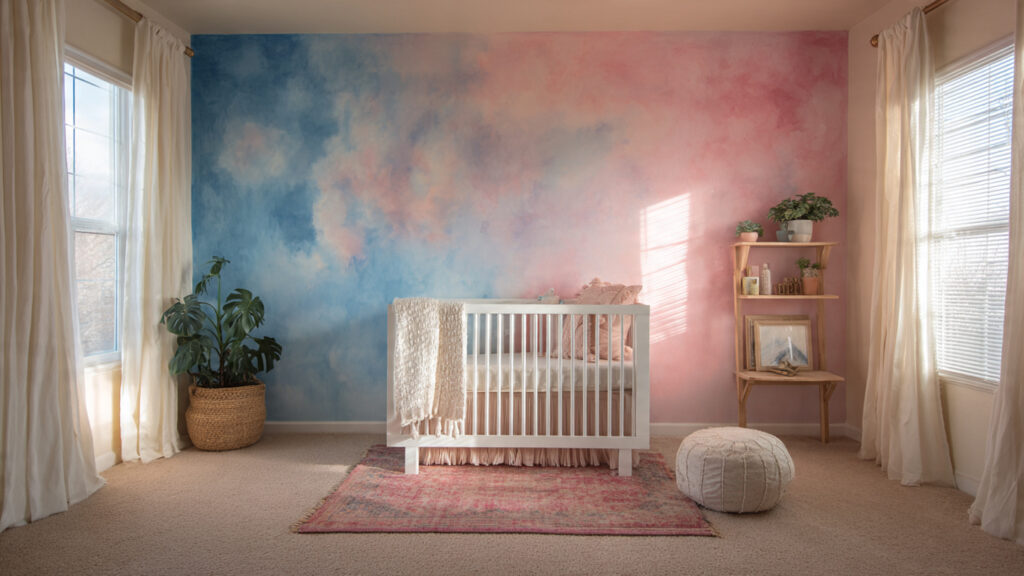
The watercolor technique requires diluted paint and large, soft brushes. Apply light strokes in overlapping layers to create transparency. Avoid harsh lines by blending edges gently. Pastel shades create dreamy atmospheres perfect for nurseries and creative studios. This style feels artistic yet subtle, adding color without overwhelming the space. Proper sealing ensures longevity while preserving the soft-painted effect.
Conclusion
Wall decor painting is more than just adding color to a surface — it’s about expressing creativity, setting the mood of a space, and transforming your home into a reflection of your personality. From bold geometric accent walls and calming botanical murals to dreamy ombre gradients and artistic watercolor effects, these 13 wall decor painting ideas offer something for every style and skill level. Whether you prefer modern minimalism or expressive statement art, a well-planned painted wall can completely elevate the look and feel of any room without requiring a large budget.
With the right tools, thoughtful color choices, and a bit of imagination, your walls can become stunning focal points that inspire comfort and creativity every day. Now it’s your turn — choose your favorite idea, gather your supplies, and start turning your blank walls into beautiful works of art.